— and the Distance Between Those Two Things Has Never Mattered More.
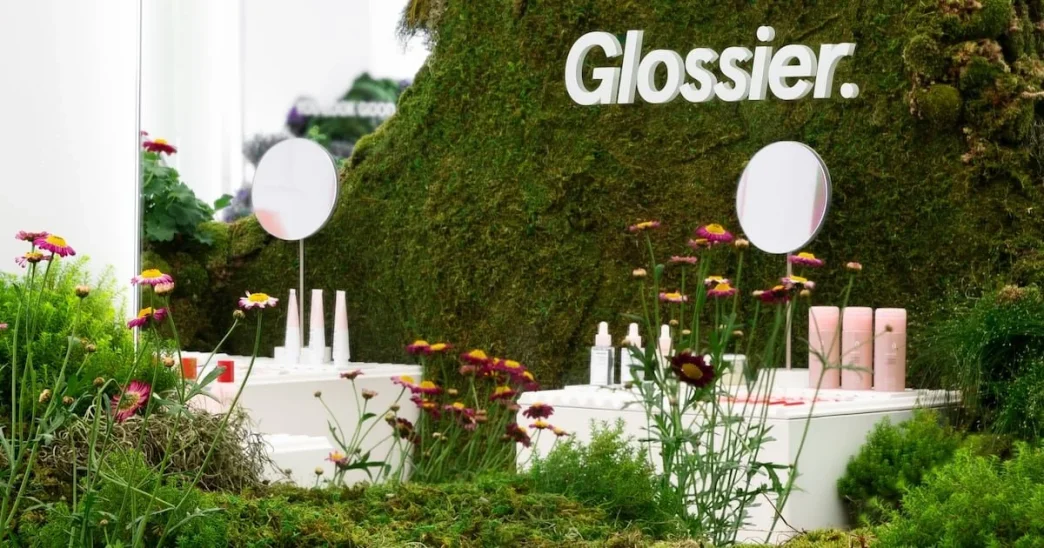
The numbers are clear. Glossier’s valuation has fallen from $1.8 billion in 2021 to somewhere south of $1 billion today — a decline of at least $800 million in paper value for a company that has not fundamentally changed what it sells.¹ Revenue, estimated at $275 million in projected retail sales for 2023 and somewhere in the $200 to $250 million range through 2024, has contracted to approximately $100 million in direct-to-consumer sales in 2025 — a compression that reflects both channel mix shifts and genuine demand erosion.² In February 2026, incoming CEO Colin Walsh cut thirty percent of the company’s 170-person workforce, eliminating approximately 54 roles.³ In March, the brand announced the closure of nine of its twelve flagship stores, retaining only New York, Los Angeles, and London.⁴ Walsh has publicly characterized his mandate as building from a clean slate, cutting planned product launches to refocus on hero SKUs, and creating smaller, more agile teams. That is the language of a restructuring. The question worth asking is whether restructuring addresses the actual problem — which is not operational, not structural, and not primarily financial. It is existential.
The Architecture of What Glossier Was
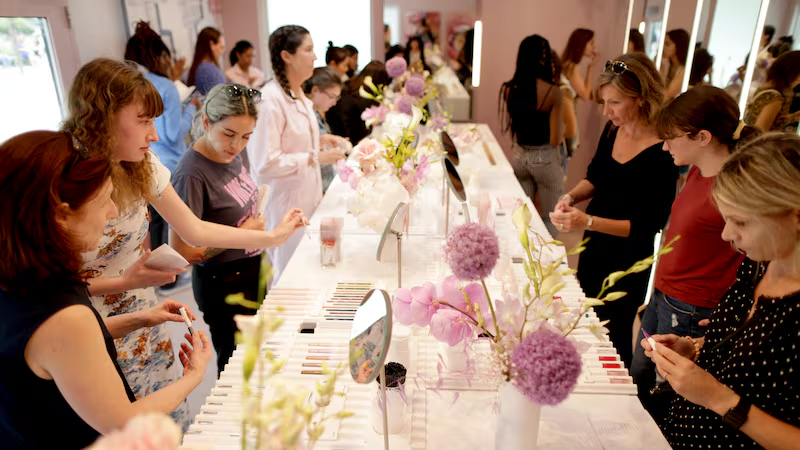
To understand what is failing at Glossier in 2026, you have to understand with precision what succeeded between 2014 and 2019. Glossier was not a beauty brand that found a community. It was a community that decided to become a beauty brand — and that sequence, unusual to the point of being nearly unprecedented at commercial scale, produced a set of competitive advantages that had almost nothing to do with product formulation and almost everything to do with cultural position. Emily Weiss built Into The Gloss in 2010 as a beauty editorial platform with a specific aesthetic sensibility: the French-girl medicine cabinet, the model’s nightstand, the effortless cosmetic intelligence of women who seemed to be doing nothing and looked extraordinary. The blog’s comment sections were populated by an unusually intelligent, beauty-literate readership. When Glossier launched in 2014 with four products — a moisturizer, a face mist, a skin tint, and a balm — it was selling to people who had already been in conversation with the brand for four years. The loyalty was not purchased through marketing. It preceded the product entirely.
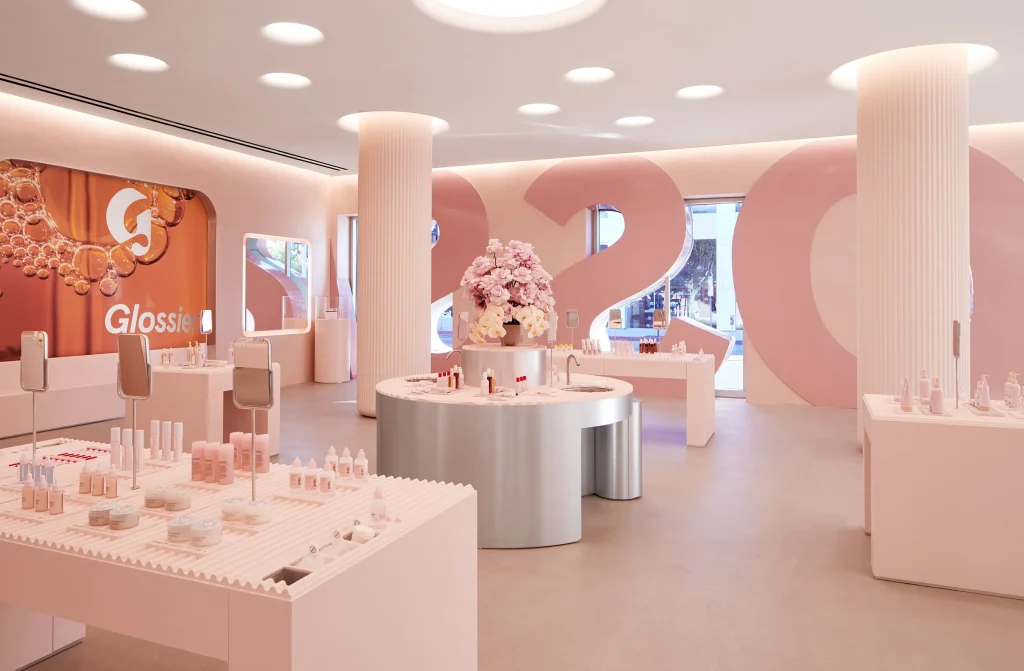
The result was a brand with a cultural moat so deep that early product quality issues — and there were some — barely registered as commercial problems. The Boy Brow eyebrow gel, launched in 2016 at a price point slightly higher than drugstore alternatives, became a cult object not primarily because of its formulation but because of what owning it meant. The Cloud Paint blush, the Milky Jelly Cleanser, the Generation G lipstick — each of these products carried a cultural signal that operated independently of their performance in blind consumer testing. You could buy Glossier You, the brand’s 2017 fragrance and arguably its most technically accomplished product, and be buying a skin-scent philosophy rooted in the original Into The Gloss ethos: the idea that the most sophisticated beauty makes the wearer smell more like themselves, not more like a product. The brand’s aesthetic coherence was so total that a Glossier product photographed from across a room was identifiable by its packaging alone — that particular shade of millennial pink, that sans-serif copy, that studied understated simplicity.
That coherence was the asset. It was also the thing that every subsequent strategic decision would slowly dilute.
The Leahy Era: Necessary Medicine, Wrong Prescription
When Emily Weiss stepped down as CEO in May 2022 and Kyle Leahy assumed the role, the company was in genuine distress. It had conducted two rounds of layoffs in under a year, its DTC model was under structural pressure from rising customer acquisition costs, and the cultural moment that had elevated it was beginning to fragment. Leahy came from Cole Haan and American Express, not the beauty world, and she was explicitly hired to stabilize the business rather than to amplify its creative identity. Her mandate was operational: build the infrastructure, fix the margins, find the distribution model that could sustain the brand commercially without requiring it to be in perpetual cultural ascendancy.⁵
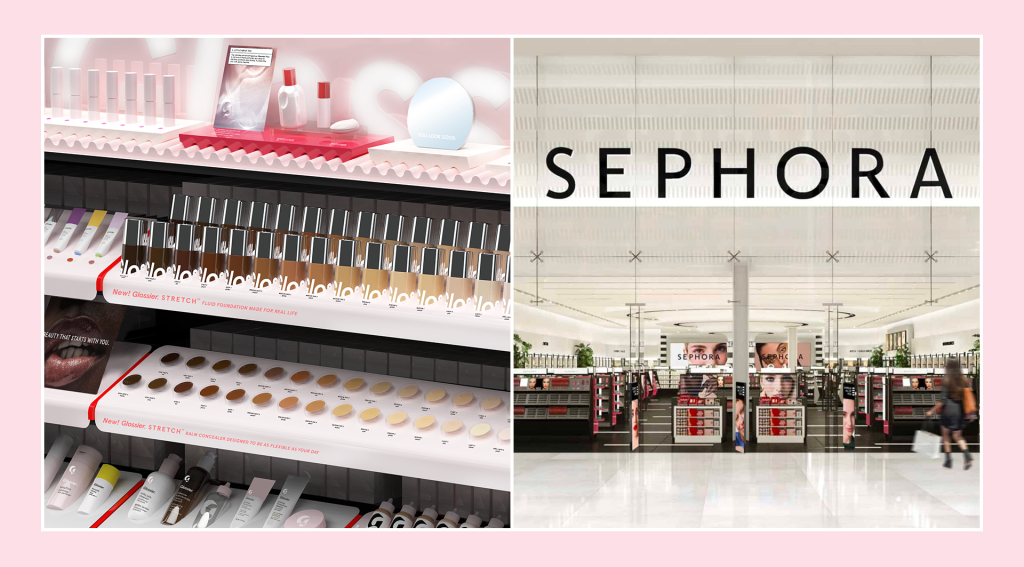
The Sephora partnership, announced in July 2022 and launched in stores in February 2023, was the most consequential decision of the Leahy era and the one that most visibly changed what Glossier is. Entering Sephora across 600 North American doors gave Glossier access to the world’s most authoritative prestige beauty retail environment and dramatically expanded its consumer reach into demographics it had not previously engaged at scale. By 2023, Glossier You had become Sephora’s best-selling fragrance SKU in stores and online.⁶ The brand launched with international Sephora partners and expanded to Mecca Brands in Australia and Space NK in the UK. Marketplace sales grew 80% under Leahy’s tenure.⁷ These are genuinely significant commercial accomplishments.
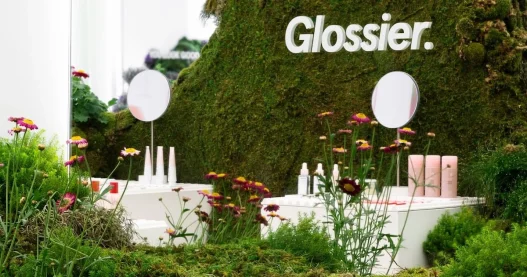
But the cost of those accomplishments was paid in a currency that does not appear on a balance sheet. The particular quality of Glossier’s cultural position before Sephora was its controlled scarcity — not price scarcity, but availability scarcity. You encountered Glossier on Instagram or at a standalone store or through a friend who had discovered it, not under Sephora’s overhead lighting alongside fifty competitors on an adjacent shelf. The brand’s community identity, built on the shared sense of being in on something, is structurally incompatible with broad-based specialty beauty retail distribution. The brand did not stop being Glossier when it entered Sephora. It started being a different kind of Glossier — one accessible to everyone — and the original community that built it reacted to that transition with a combination of pride and the particular grief of watching something precious become ordinary.
Simultaneously, the product strategy accelerated in ways that compounded the identity drift. Under Leahy, Glossier moved to a new product launch every four to six weeks — a cadence that Bloomberg characterized as an attempt to “reignite growth” but that contradicted everything the original brand had communicated about restraint and curation.⁸ A brand whose original proposition was knowing exactly what you need and not selling you anything else had become a brand generating product at a pace that suggested it was unsure what it was. Lip gloss. Body wash. Serums. Mascara. Perfume flankers. Merchandise. The category expansion was defensible in isolation — beauty brands grow by adding categories — but at Glossier it accumulated into an identity blur that the original consumer, the one who had been there since the Into The Gloss comment sections, experienced as a kind of brand-level betrayal.
The Fragrance Bet: Smart Commercially, Confused Strategically
The fragrance pivot deserves its own analysis, because it captures the central tension of the Leahy era more precisely than any other product decision. Glossier You, launched in 2017, is technically one of the most interesting fragrances any beauty brand has produced in the last decade. Formulated by Frank Voelkl — the nose behind Le Labo’s Santal 33, arguably the most culturally dominant fragrance of the 2010s — and co-developed with Dora Baghriche, You was built around a specific idea: that the most elegant fragrance is one that amplifies the wearer’s own skin chemistry rather than covering it.⁹ It is composed almost entirely of base notes, primarily ambroxan, and its behavior on skin is genuinely individual — the same bottle smells meaningfully different on different people. That is not a marketing claim. It is a formulation philosophy, and it is a sophisticated one.
For seven years after its launch, Glossier released no second fragrance. The restraint was intentional — Weiss had built the brand on the logic that the right product, positioned correctly, does not need a flanker. You sells one bottle every eighteen seconds at its commercial peak. It became Sephora’s best-selling fragrance after a TikTok moment in 2022, in which a user declaring it the “scent of the summer” went viral and brought the historically Instagram-native brand into a new content ecosystem.¹⁰ The fragrance was the brand’s clearest commercial success story and its purest expression of its founding philosophy simultaneously.
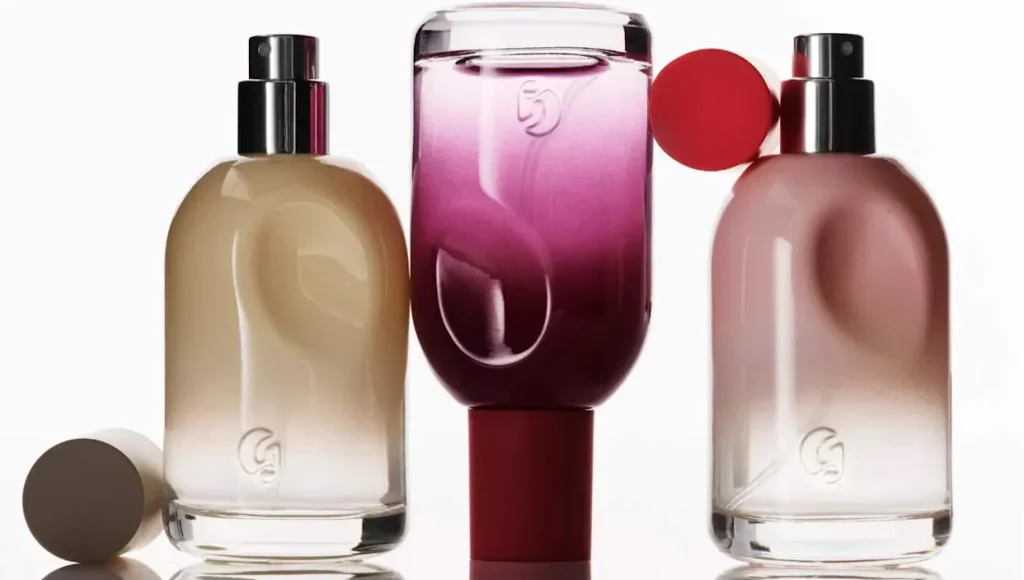
Then, in October 2024, Glossier launched two flankers at once. You Rêve and You Doux arrived under the “Impressions of You” franchise — a range name that gestures toward the original’s identity philosophy but that, by existing, contradicts it. The original You was positioned as singular. The implication of flankers, however well-formulated, is that there are multiple versions of “you,” which undermines the premise. To their commercial credit, Rêve and Doux generated $1 million in DTC and retail revenue in their first twenty-four hours, excluding Sephora sales — making the launch, by Glossier’s own characterization, the biggest in the brand’s history.¹¹ You Fleur followed in March 2025, five months later, after a seven-year wait for a single follow-up had become a five-month cascade of three simultaneous releases. Puck described this pace as “baffling” for a brand that had always prioritized disciplined image maintenance over innovation velocity.¹² Business of Fashion ran the piece with the headline “Glossier Needs More Than ‘You’ to Grow,” which managed to identify the commercial problem and the brand problem in the same clause.¹³
The fragrance expansion was not wrong in intent. Fragrance was the fastest growing category in beauty in 2024, Glossier’s existing fragrance equity was the strongest it had ever been, and the flanker model — extending a proven hit into adjacent olfactory territory — is a commercially sound strategy with numerous successful precedents. The execution problem was one of pacing and coherence. Three fragrances in five months, after seven years of deliberate scarcity, read not as strategic confidence but as a company attempting to capture a market moment before it closed — a fundamentally reactive posture from a brand whose entire identity had been built on the opposite.
The Leadership Churn and What It Reveals
In the eighteen months preceding Kyle Leahy’s own departure announcement in June 2025, Glossier lost its chief commercial officer, chief marketing officer, creative director, and deputy creative director — the entire creative and commercial leadership layer below the CEO, in a window too compressed to represent normal attrition.¹⁴ Each departure carried its own specific circumstances, but the pattern matters more than any individual explanation. Chitra Balireddi, the CCO, is now CEO of Nécessaire — a brand whose identity clarity and product discipline represent the Glossier aesthetic template, executed with the restraint Glossier itself has been moving away from. Kleo Mack, the CMO who oversaw the fragrance expansion, departed for Shark. Marie Suter, the creative director who was central to how Glossier’s visual identity had been maintained through the Sephora transition, left to start her own agency. These are not people who failed. They are people who concluded, at roughly the same time, that the thing they had been hired to steward was no longer recognizably the same thing.
Leahy’s announcement came in June 2025, couched in the language of successful completion: “After nearly four years, Glossier is larger and more profitable than ever before.”¹⁵ That statement was technically accurate in some respects and strategically misleading in others. The brand had grown its wholesale footprint significantly. It had generated record fragrance launches. It had expanded internationally. What it had not done was resolve the foundational tension that had existed since the Sephora decision: how do you maintain the cultural specificity that made the brand worth putting in Sephora in the first place, once it is in Sephora? Leahy did not create that tension. She inherited it, managed its commercial consequences effectively for three years, and left before it fully resolved.
Colin Walsh arrived in October 2025 with a biography that reads as a deliberate counterweight to the operational complexity that preceded him. Former CEO of Ouai before and after its acquisition by P&G, former CEO of P&G’s specialty beauty division, former head of DevaCurl — Walsh is a brand rationalist, someone whose track record is defined by focus and operational discipline rather than by cultural vision or product innovation.¹⁶ His first moves confirmed the pattern: thirty percent workforce reduction in February 2026, nine of twelve flagship store closures in March, cancellation of planned product launches, and a stated intention to rebuild around hero products.¹⁷ His first interview with Business of Fashion was headlined “Fewer Stores, Fewer Products” — a headline that accurately describes a restructuring plan, but that also describes the brand walking back almost everything the previous three years of strategy built.
Where Glossier Actually Is in 2026
The honest picture, assembled from available data, is of a brand with a genuinely powerful foundational identity that has spent four years trying to be multiple things simultaneously and has succeeded at none of them fully. The Sephora distribution is real and valuable — but it is distributed alongside dozens of competitors and without the community context that made Glossier’s original consumer relationship so commercially durable. The fragrance franchise is the strongest genuine asset the brand has, but it is being managed with a reactive urgency that undermines the very restraint that made You valuable. The product range has expanded into complexity that the brand’s visual identity and aesthetic DNA were never built to accommodate.
Revenue tells the sharpest version of the story. The DTC channel, always Glossier’s highest-margin and most brand-coherent revenue stream, generated approximately $102 million in 2025 — representing what ECDB characterizes as essentially flat growth from the prior year.¹⁸ Average order value on glossier.com sits between $125 and $150, below the high-industry benchmark of $204, suggesting that the higher-ticket category expansions have not meaningfully changed the transaction profile.¹⁹ The brand’s conversion rate of 7.5 to 8 percent is strong — suggesting that the people who come to the site are committed buyers — but the site traffic of approximately 3.2 million sessions in November 2025 is dramatically smaller than Sephora’s 76 million, underscoring how dependent the brand’s commercial scale has become on wholesale rather than the owned channel that built it.²⁰ The valuation decline from $1.8 billion to under $1 billion reflects not just revenue compression but investor uncertainty about whether the brand’s current configuration constitutes a recoverable asset or a fundamentally changed one.
The investor question — IPO, acquisition, continued independent operation — hovers over all of this without clean resolution. Puck reported on what it characterized as Glossier’s “new exit strategy,” framing the fragrance push as part of a broader effort to accelerate revenue and demonstrate margin improvement for a potential buyer or public market.²¹ The $265 million the brand has raised from investors including Sequoia Capital and Lone Pine Capital creates a return expectation that the current financial profile does not satisfy, and the management team’s internal goal of reaching $400 million or more in annual recurring revenue to justify IPO consideration remains far from achieved under any current trajectory.²²
The Identity Question Walsh Cannot Restructure His Way Around
Colin Walsh’s restructuring is operationally correct. Closing underperforming stores, cutting SKUs, reducing headcount to match actual revenue — these are the right decisions for a company in Glossier’s current financial position, and the fact that they are being made decisively rather than incrementally is a genuine improvement over the drift of the Leahy era. But the thing that Walsh cannot solve with workforce reduction and store closures is the question of what Glossier is for in 2026 — and that question has no operational answer.
The brand’s original proposition, communicated through product, packaging, retail experience, editorial voice, and community cultivation simultaneously, was that beauty does not require complexity to be meaningful. That proposition is being made more urgently, more credibly, and with greater cultural freshness by a generation of indie brands that have learned from Glossier’s 2014 to 2019 playbook and are executing it with the advantages of watching what the original did wrong. Nécessaire — run by Glossier’s former chief commercial officer — is doing exactly what Glossier used to do: extreme SKU discipline, ingredients transparency, adult aesthetic simplicity, DTC-first distribution. Rhode — now in Sephora globally — is doing the glazed, dewy, skin-first proposition Glossier pioneered, with the added advantage of not having a twelve-year brand history to defend. The competition is not that Glossier has failed to keep up with trends. The competition is that the thing Glossier invented has been adopted and iterated by faster-moving brands that are not carrying the organizational and cultural weight of having been a defining brand in a prior era.
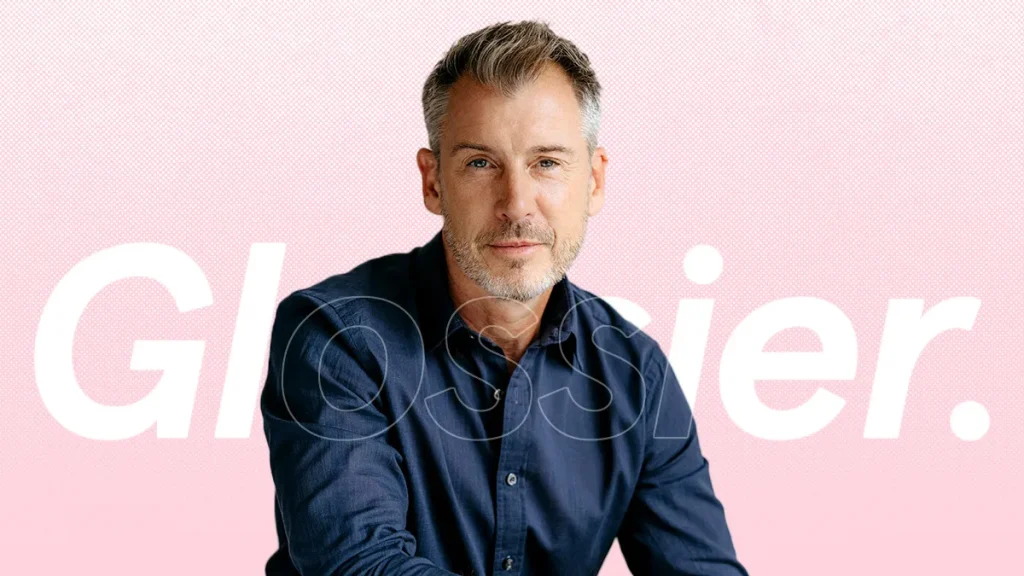
Walsh’s stated goal — to make Glossier “a true legacy brand,” as Cosmetics Business characterized it — is precisely the right aspiration and precisely the most difficult one to execute from the position the brand is currently in. Legacy brands are built over decades of maintained coherence. Glossier spent its last four years in structural incoherence, and the challenge facing Walsh is not to build a legacy from scratch but to recover the thread of the one the brand already had before the Sephora deal, the SKU acceleration, the fragrance flanker rush, and the executive departures collectively severed it. Whether that thread is recoverable, and whether a CEO whose track record is defined by operational discipline rather than creative vision is the right person to recover it, is the central unresolved question of the brand’s current moment. The clean slate Walsh is building is real. What gets drawn on it remains entirely open.
Sources
- Various / LinkedIn commentary, 2025–2026
- Bloomberg, March 2023; martini.ai Research, 2025; ECDB, 2025
- Global Cosmetics News, February 2026
- Cutekindof Substack / Global Cosmetics News, March 2026
- Fortune / Retail Dive, 2022
- Glossy, December 2024
- Retail Dive / Business of Fashion, June 2025
- Bloomberg, March 2023
- Business of Fashion, October 2024
- Business of Fashion, March 2025
- Glossy, April 2025
- Puck, February 2025
- Business of Fashion, March 2025
- Business of Fashion, August 2025
- TheIndustry.beauty, June 2025
- Global Cosmetics Industry / WWD, September 2025
- Global Cosmetics News, February 2026; Business of Fashion, March 2026
- ECDB, 2025–2026
- Grips Intelligence, November 2025
- Grips Intelligence, November 2025
- Puck, February 2025
- Business Model, March 2026