
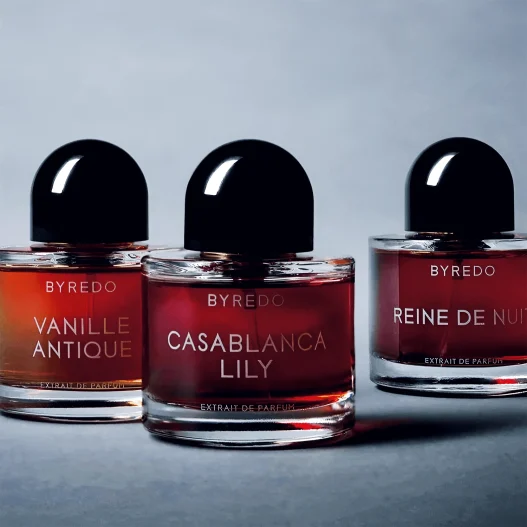
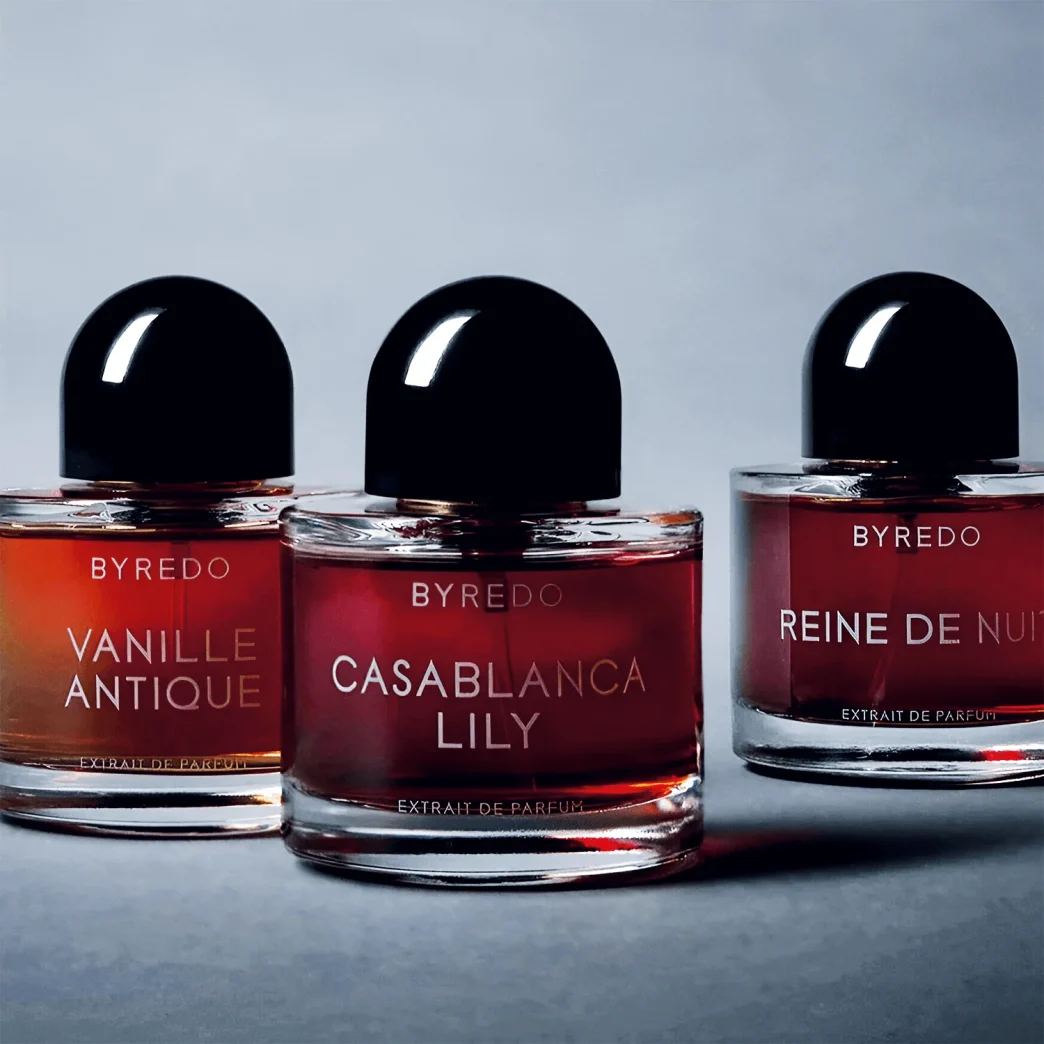
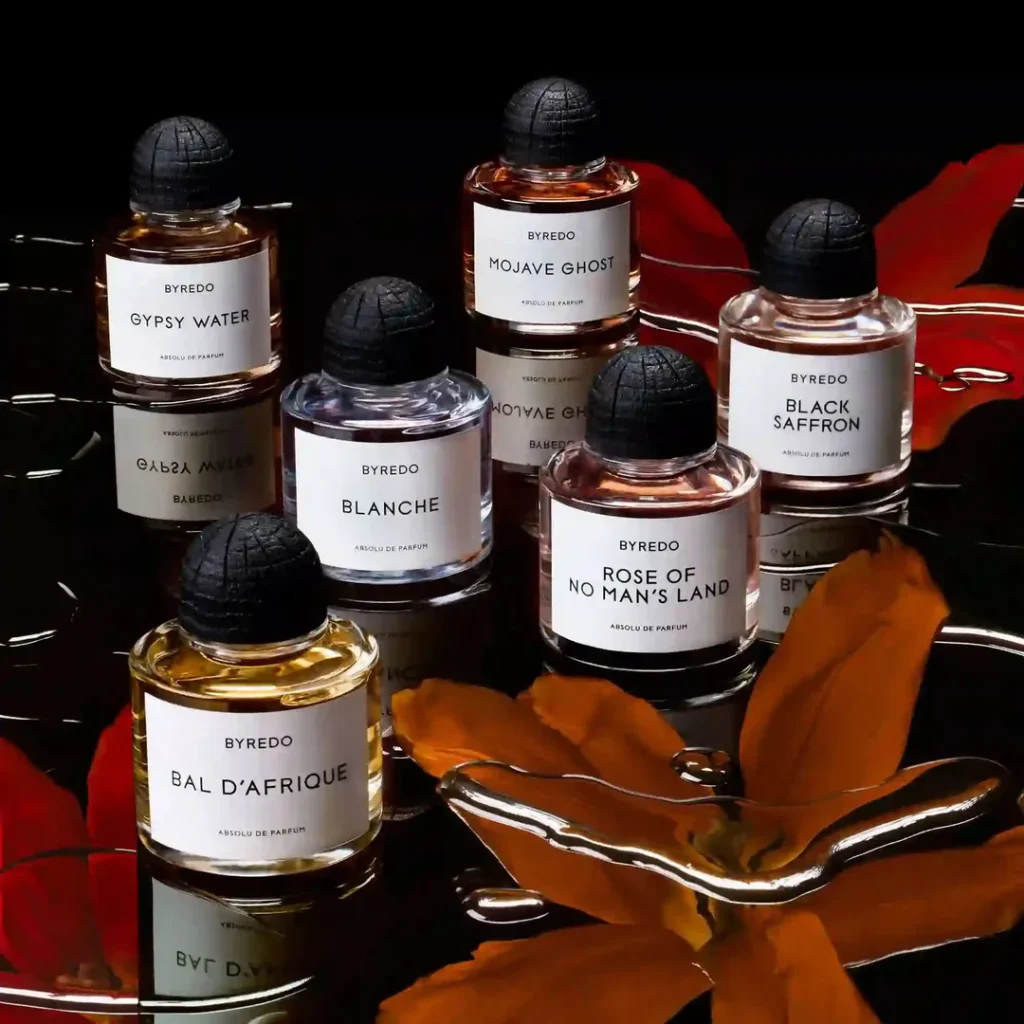
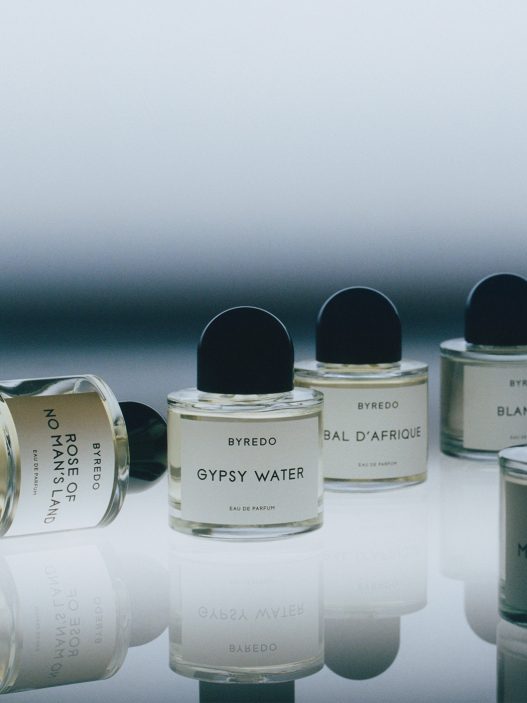
Byredo is quietly constructing one of the most deliberate price architectures in contemporary niche fragrance. Over the past two years, the Swedish house has built a tiered product system — Eau de Parfum at $235, Absolu de Parfum at $290, and Perfume Extracts at $465 — applying the logic to its most beloved icons, including Bal d’Afrique, Mojave Ghost, Blanche, and Gypsy Water. The move looks, on the surface, like a premium upsell. In practice, it is a post-acquisition restructuring strategy designed to solve several problems at once: softening brand dilution, extracting higher revenue from a loyal customer base, and repositioning a brand that entered its most precarious phase when its founder walked out the door.
The first thing to understand about Byredo’s current situation is that the brand is operating without the person who built it. Ben Gorham officially departed in June 2025, three years after Puig acquired a majority stake at a reported valuation of approximately €1 billion.¹ That exit was written into the acquisition agreement from the start, which made it structurally inevitable, but structural inevitability does not make a transition less disorienting. Gorham was not merely Byredo’s creative director. He was its entire authorial voice — the origin stories, the emotional framing, the particular kind of cultured, memory-driven narrative that made someone pay $235 for a fragrance in a minimalist bottle they could describe to exactly twelve people at a dinner party. That intangible quality was the asset Puig actually paid for, and it left the building with him.
What Puig inherited, then, was a highly recognizable brand with a loyal consumer base, strong distribution, a growing retail footprint, and a product line that was, by common consumer consensus, persistently underperforming on longevity. Anyone who has spent time in fragrance communities online knows that Byredo’s EDPs carry a reputation for projection and sillage that sits well below what the price point implies.² The Absolu collection, framed publicly as an intensification of the brand’s iconic compositions, is an elegant answer to that criticism. The Bal d’Afrique Absolu, launched in 2025 and priced at $290 for 50ml, directly addresses every complaint ever leveled at the original — reviewers note eight to twelve hours of longevity, meaningful projection, and a composition that deepens the original’s emotional signature rather than simply amplifying it.³ It is, in effect, the version of the EDP that some consumers always wanted, sold back to them at a 23% premium.
That is not a cynical observation. It is an accurate description of what a well-executed tiered strategy looks like in practice. The genius of applying the Absolu treatment specifically to bestsellers like Bal d’Afrique and Mojave Ghost — rather than to lesser-known titles — is that it converts already-loyal customers into repeat, higher-value purchasers without requiring any new brand-building investment. The customer who loves Bal d’Afrique does not need to be sold on Bal d’Afrique. They need to be given a reason to upgrade. The reformulated note pyramid, the Yakisugi-wood cap, the deepened bottle hue — these are all deliberate signals that this is a meaningfully different product, not just a concentration bump.⁴
The Perfume Extracts, sitting at $465 for 50ml, serve a different and arguably more strategically important purpose. Unlike the Absolu line, which revisits heritage EDPs, the Extracts — Casablanca Lily, Cuir Sellier, Rouge Chaotique, Bois Obscur, Vanille Antique — are original compositions introduced at the top of the price ladder from the start.⁵ This is the tier that does not need to solve the performance problem, because it exists at a price point where performance is assumed. It is the tier that competes with Frédéric Malle, with the higher offerings from Amouage, with the kind of fragrance that does not need to explain itself at a Sephora counter. Byredo has historically occupied an unusual middle position in the niche market — recognizable enough to feel accessible, exclusive enough to feel intentional. The Extracts are a bid to push one layer of the brand definitively upward, into territory where no dupe can follow and no department store discount can reach.
The dupe problem is, in fact, more relevant to this strategy than Byredo will ever publicly acknowledge. The TikTok fragrance community has catalogued affordable alternatives for virtually every Byredo EDP — Gypsy Water alternatives, Mojave Ghost dupes — and search volumes for these comparisons have grown substantially as the brand’s visibility has increased.⁶ This is the structural cost of scale. When Puig acquired Byredo and began expanding its retail presence, pushing into new markets, opening flagship stores in London’s Covent Garden and Barcelona,⁷ the brand inevitably became more widely known and, by extension, more widely copied. There is no clean solution to this problem. But a high-concentration Perfume Extract with a genuinely complex and material-rich formulation is meaningfully harder to replicate at a sub-$50 price point than a standard EDP. The Extracts, in this reading, are partly a quality statement and partly a defensive perimeter.
There is a broader industry logic operating here as well. Puig paid approximately ten times Byredo’s annual revenue in 2022.⁸ That valuation assumed significant growth potential — more markets, more categories, more consumers. The tension with niche credibility has always been that the thing that makes a niche brand valuable is precisely the thing that scale destroys. Byredo’s tiered architecture is an attempt to resolve that tension structurally rather than philosophically: sell the EDP to the widened audience that mass retail creates, while simultaneously building a premium tier above it that signals to the original faithful that there is still somewhere elevated to go. This is not a new idea in luxury goods — it is roughly what watchmakers have always done, what haute couture does for ready-to-wear — but it is relatively new in niche fragrance.
The risk is execution and coherence. Byredo’s original appeal was rooted in a kind of studied simplicity: fewer notes, cleaner narratives, minimal visual noise. The tiered architecture introduces complexity into a brand that built its identity on the absence of it. There is a version of this strategy that works beautifully — where each tier feels like a natural deepening of the brand’s world, where the Extracts feel like the purest expression of what Byredo always was, where the customer journey from EDP to Absolu to Extract feels earned and coherent. There is also a version where it reads as a conglomerate’s revenue optimization dressed in the language of craft, and where the customers who built the brand on its early restraint begin quietly to look elsewhere. The distance between those two outcomes is not determined by the products themselves, which are largely excellent. It is determined by whether the brand, operating now for the first time entirely under Puig’s direction without its founder, can maintain the cultural intelligence that made any of this worth $1 billion in the first place.







I couldn\’t agree more! Your post is a valuable resource that I\’ll be sharing with others.
Thank you, for your kind words. I\’m committed to maintaining the quality of my posts.
I\’m so glad I found your site. Your posts are consistently excellent.