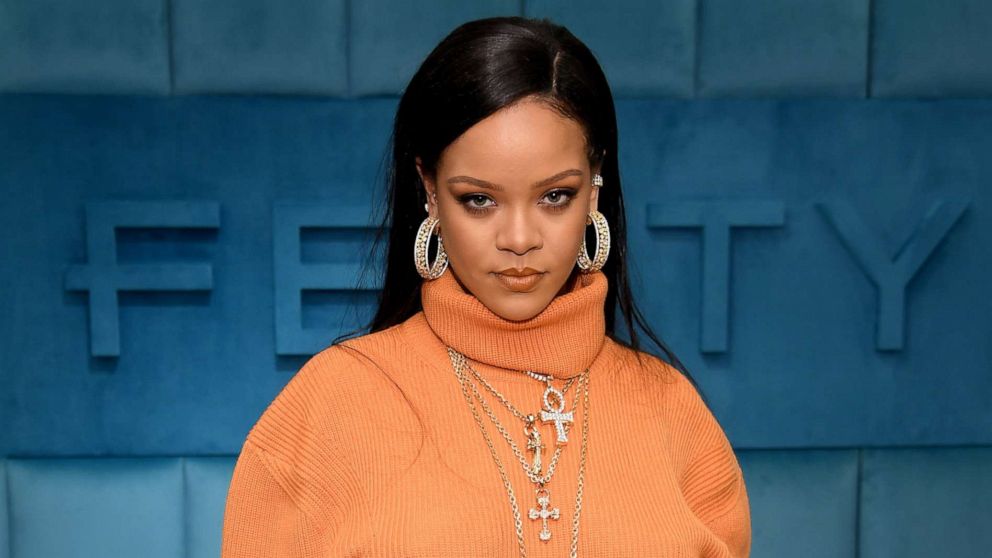
In what the Financial Times characterized this week as the most significant portfolio reset in LVMH’s nearly forty-year history, the group announced the definitive sale of the Marc Jacobs fashion label to a joint venture between WHP Global and G-III Apparel Group in a deal valued at up to $850 million — ending twenty-nine years of LVMH ownership of one of American fashion’s most consequential names.¹ Simultaneously, the group is exploring the sale of its 50% stake in Fenty Beauty, valued by JPMorgan at between $1.5 billion and $2.5 billion, alongside separate divestiture processes for Make Up For Ever and Fresh, two beauty brands acquired at the height of LVMH’s aggressive portfolio-building phase in 1999 and 2000.² Taken together with the prior sales of Off-White, its stake in Stella McCartney, and its DFS duty-free operations in Hong Kong and Macau, the picture that emerges is not a company making selective refinements. It is a company conducting a structural reckoning with the full breadth of what it has accumulated across nearly four decades of acquisitive expansion — and arriving at a precise conclusion about which assets belong in the next chapter.
What Kendo Built, and What Remains of It
To understand what is happening to Fenty Beauty, you have to understand Kendo — the LVMH-owned brand incubator based in San Francisco that built it. Founded in 2010 around a core insight that Sephora’s retail network represented an unmatched launchpad for new beauty brands, Kendo operated on a model that was genuinely novel at the time: it provided everything a beauty brand needed except the founding creative vision — formulation, manufacturing, packaging, supply chain, regulatory compliance, and distribution through Sephora’s global retail infrastructure. The name itself was a deliberate statement of ambition, a play on “can do,” and in its first decade the model worked precisely as designed.³
The portfolio Kendo assembled reflected the cultural moment it was operating in. Marc Jacobs Beauty launched in 2013 as a licensed cosmetics line — not a Kendo-built brand but a licensed one — and immediately became a cult object among the fashion-adjacent beauty consumer: the Coconut Primer, the mascara, the oversized bronzers, the kohl liners. It generated the kind of product loyalty that is almost impossible to manufacture and tends to exist only when formulation quality and brand identity are genuinely aligned.⁴ Bite Beauty, a Canadian lip brand Kendo acquired in 2014, built a devoted following around food-grade ingredients and an approachable luxury positioning. KVD Beauty — originally Kat Von D Beauty, launched in 2008 — became one of Sephora’s most commercially significant brands at its peak, generating approximately $150 million in annual revenue before the founder’s departure following public controversies in 2020 caused a decline from which the rebrand never fully recovered.⁵ And then, in 2017, Fenty Beauty arrived and made everything else look like a warm-up act.
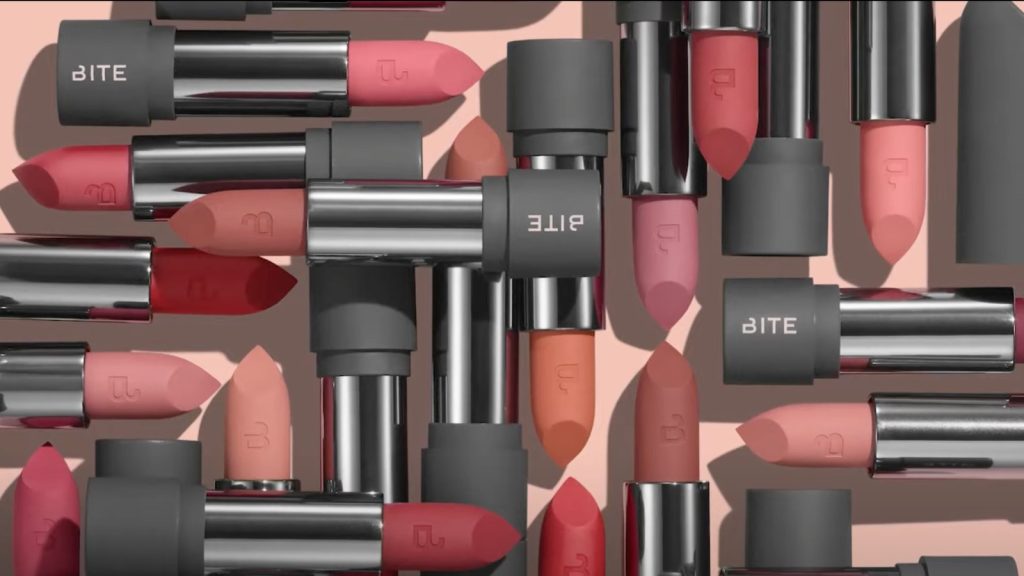
By 2026, the Kendo portfolio has been reduced to its essential minimum. Bite Beauty closed in 2022 after a clean beauty rebrand flopped during a period of pandemic-driven lipstick sales collapse. KVD Beauty was sold to Windsong Global in September 2025 — the first brand Kendo had ever divested — at a price that reflected a small fraction of its peak valuation.⁶ Marc Jacobs Beauty was killed by Kendo in 2021 with minimal public explanation, causing genuine grief among its loyal consumer base. Ole Henriksen and the Lip Lab concept, a spinoff from Bite Beauty’s in-store lipstick customization program, are the two non-Fenty assets still technically operating within the structure. The current Kendo brand portfolio page lists Fenty Beauty, Fenty Skin, Fenty Hair, Fenty Fragrance, Ole Henriksen, and Lip Lab — an inventory that makes unambiguously clear where all of the incubator’s commercial weight now sits.⁷ Business of Fashion has described a potential Fenty sale as effectively “a death knell for the beauty incubator” — and that characterization is precise.⁸ If Fenty exits, Kendo’s remaining assets do not constitute a viable independent business. They constitute a holding structure awaiting its own resolution.
The Marc Jacobs Situation Is Unusually Complex
The Marc Jacobs sale to WHP Global and G-III, announced May 14, deserves its own layer of analysis — not because it is the most financially significant of LVMH’s current divestiture activity, but because of what is happening to Marc Jacobs Beauty simultaneously and what the two stories reveal about how licensing-dependent beauty brands actually function.
LVMH acquired the Marc Jacobs fashion brand in 1997, the same year Marc Jacobs became the first creative director of Louis Vuitton.⁹ The Kendo-built Marc Jacobs Beauty line was an extension of that fashion house relationship — a licensed cosmetics program that gave the brand a meaningful footprint in Sephora. When Kendo killed that line in 2021, the fashion label was still LVMH’s. The beauty license then migrated: Coty, which has held the Marc Jacobs fragrance license for over twenty years — responsible for the Daisy, Perfect, and Lola franchises that built Marc Jacobs into a top-ten female fragrance globally — extended that agreement in 2023 to include cosmetics, establishing the foundation for a relaunch entirely outside of the LVMH ecosystem.¹⁰
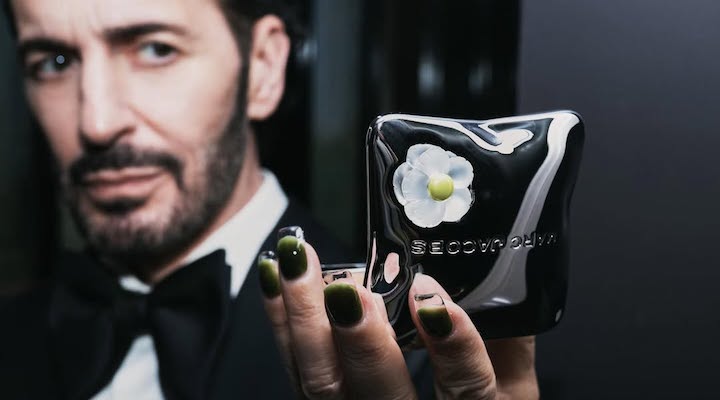
Marc Jacobs Beauty is now confirmed for a June 2026 launch under Coty’s license, arriving with the kind of genuine consumer anticipation that very few relaunches manage to generate. The brand’s Instagram account, dormant for years, updated its bio in April to read “Coming June 2026” and immediately attracted significant industry attention.¹¹ On May 4 — the night of the Met Gala — Marc Jacobs himself posted a photograph holding a mirrored compact embossed with a daisy motif, captioned “Not tonite but coming soon. Legally Bronze,” a reference that simultaneously confirmed the bronzer’s existence, gestured at the daisy visual motif from the fragrance line, and demonstrated the particular kind of effortless brand fluency that made the original Kendo product so coveted.¹² The relaunch is positioned at the intersection of nostalgia equity — cult devotion from the 2013 to 2021 period — and Coty’s global distribution infrastructure, which now includes a fifteen-year licensing agreement that gives both parties a long runway to actually build something.
The timing creates a layered irony that has not been fully unpacked in coverage of either announcement. Marc Jacobs Beauty is relaunching in June 2026 under a Coty license — the same month the Marc Jacobs fashion label itself formally exits LVMH’s ownership. The beauty line’s new parent company for licensing purposes is Coty. The fashion brand’s new owner is WHP Global and G-III. Marc Jacobs himself remains creative director of the fashion brand under the new ownership structure and maintains his relationship with the beauty relaunch.¹³ The net effect is a complete separation of the Marc Jacobs beauty and fashion entities from the LVMH group, arriving at the precise moment when both are, separately, generating more consumer excitement than they have in years. LVMH extinguished the beauty line in 2021 and is selling the fashion brand in 2026 — and in both cases, the brand’s commercial vitality appears to be recovering in the process of leaving.
The Restructuring Logic and What It Reveals About LVMH’s Strategic Mind
During LVMH’s most recent earnings call, Bernard Arnault highlighted Louis Vuitton Beauté, Guerlain, and Dior’s beauty performance with the specificity of an executive who has decided where he wants to concentrate attention. “One Dior lipstick is sold every two seconds,” he told analysts. He made no mention of Make Up For Ever, Fresh, or Fenty Beauty.¹⁴ That omission was its own statement. The brands LVMH is divesting are not necessarily failing brands — Make Up For Ever has genuine professional artist credibility, Fresh has a loyal skincare following, and Fenty Beauty generated $602 million in revenue in 2024.¹⁵ What they share is a positioning that has drifted away from the LVMH thesis as Arnault has sharpened his definition of what that thesis actually is.
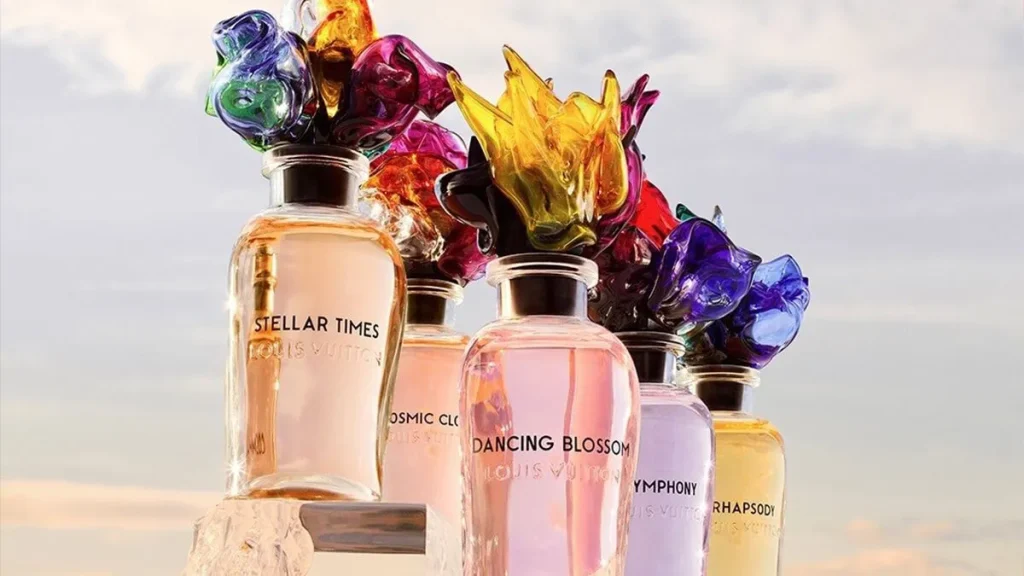
LVMH’s fragrance and cosmetics division posted a 3% revenue decline in 2025 to €8.17 billion, following a modest gain in 2024, with declines in Asia, Japan, and the US outweighing growth in Europe and the Middle East.¹⁶ The group’s response to that pressure — divesting brands in the accessible and masstige tiers while doubling down on the houses directly tied to its core luxury fashion identity — is a coherent strategic retrenchment, not a panicked reaction. Arnault has presided over this kind of portfolio sharpening before. The logic is consistent: consolidate resources and management attention around the assets where LVMH’s specific capabilities — its brand heritage, its ultra-luxury distribution, its fashion house adjacency — create the most defensible competitive position. Make Up For Ever and Fresh require a different operational playbook than Dior Beauty or Guerlain. Fenty requires a co-ownership navigation with one of the most commercially astute founders in the industry. The energy required to do all of these things well simultaneously, during a period of macro pressure, is energy Arnault has apparently decided should be spent elsewhere.
The new head of LVMH’s beauty division is Véronique Courtois, who was appointed Chairman and CEO of Parfums Christian Dior alongside the broader beauty division leadership role after Stéphane Rinderknech’s departure.¹⁷ The choice is itself a signal: Courtois comes from the house that Arnault cited most specifically on the earnings call, the house where he said a lipstick sells every two seconds. The beauty division that emerges from this restructuring will be more concentrated, more fashion-house adjacent, and more explicitly luxury in its positioning than the one that existed at the beginning of the decade — when Kendo was launching celebrity-fronted brands and LVMH was using Sephora as a launchpad for an incubator experiment that ultimately produced one genuine success and several expensive lessons.
What Fenty’s Sale Actually Means
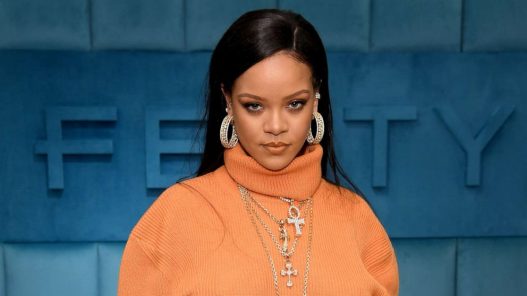
For whoever acquires LVMH’s 50% stake in Fenty Beauty, the co-ownership structure with Rihanna is both the clearest argument for the asset’s value and the most consequential variable in any due diligence process. Rihanna is not a passive licensor. She has demonstrated through both Fenty Beauty and Savage X Fenty that her involvement in her brands is substantive — in product development, in campaign direction, in the cultural positioning that has kept Fenty Beauty in a different conversation from the brands that simply applied inclusivity language to existing product lines and waited for credit.¹⁸ The buyer is acquiring a 50% co-ownership position alongside that level of founder involvement, in a brand with $602 million in annual revenue and meaningful category expansion — Fenty Skin in 2020, Fenty Fragrance in 2021, Fenty Hair in 2024, and an early 2026 India launch through a Reliance Retail partnership.¹⁹
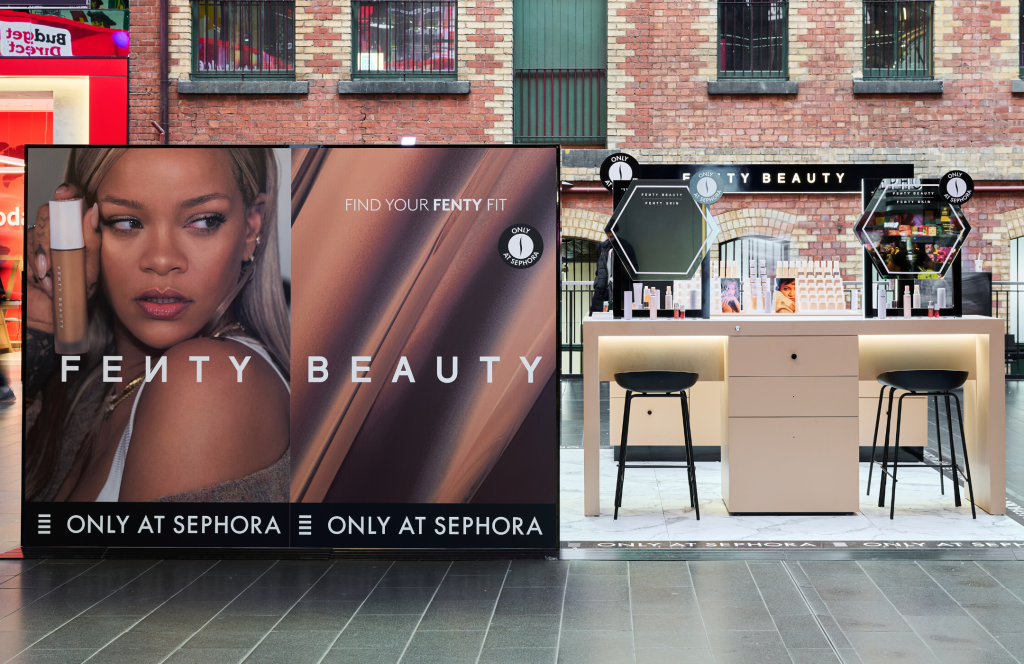
The gap between that commercial profile and a $1.5 to $2.5 billion valuation range is the part of the story that demands the most scrutiny. At $602 million in revenue, a $2.5 billion valuation implies a revenue multiple of approximately 4.2 times — modest for a prestige beauty brand in a market where M&A multiples have averaged 14.9 times EV/EBITDA in 2025.²⁰ The discount reflects the co-ownership structure’s complexity, the brand’s decelerated growth relative to its early trajectory, and the market’s uncertainty about how much of Fenty’s remaining commercial momentum depends on Rihanna’s sustained engagement at a moment when her attention is distributed across multiple business ventures. The ideal acquirer is an operator whose existing distribution and category expertise can provide the commercial infrastructure that Fenty has not yet fully built under LVMH — an owner for whom the co-ownership is a feature rather than an operational friction, and for whom $600 million in existing revenue represents a platform to compound rather than a ceiling to manage.
The broader LVMH divestiture wave — Marc Jacobs to WHP Global, Off-White to Bluestar Alliance, Stella McCartney’s buyback, DFS China to CTG Duty-Free, and the ongoing processes for Fenty, Make Up For Ever, and Fresh — amounts to a portfolio contraction of unusual scope for a company that has spent four decades defining itself through accumulation.²¹ The luxury market’s prolonged softening has accelerated a process of focus that was arguably overdue. But the brands exiting the LVMH structure this year are not, in most cases, dying. Marc Jacobs Beauty is relaunching under Coty with more cultural momentum than it had when Kendo killed it in 2021. The Marc Jacobs fashion label is entering a brand management structure that specializes in the kind of licensing and distribution optimization that the brand’s commercial architecture actually requires. Fenty Beauty, released from the incubator model that built it, may find that the right owner has been waiting for exactly this moment. The story of LVMH’s portfolio reset is not primarily a story about decline. It is a story about what happens when a company finally decides what it actually is — and what, by logical extension, it is not.