Coty’s fiscal third quarter 2026 results, filed with the SEC this week, contain a figure that no amount of management language about “performance improvement plans” can soften: a $362.8 million impairment charge against the fair value of the company’s Consumer Beauty business, driven by lower forecasted revenues and a higher weighted average cost of capital.¹ The charge lands against a segment — CoverGirl, Rimmel, Sally Hansen, Max Factor — that was already under a formal strategic review initiated in September 2025, and whose like-for-like sales dropped 5% in the twelve months to June 2024, while Coty’s prestige and consumer beauty fragrance segments grew between 2% and 9% in the same period.² The combined picture is of a company that has been quietly writing the obituary of its mass color cosmetics division in financial statements for two years, and has now formalized that assessment with a nine-figure number. The strategic review remains ongoing with no announced outcome. What is certain is that the business being reviewed is worth materially less today than it was when the review began.
The impairment charge is not, in itself, surprising to anyone who has watched Coty’s consumer beauty division closely over the past four years. The structural pressures on the mass color cosmetics segment — drugstore destocking, retail theft countermeasures that reduce impulse purchase opportunities, rising competition from DTC brands and TikTok Shop-native color lines, immigration policy changes that affected demand in specific retail corridors — were visible well before the strategic review was announced. What the $362.8 million charge crystallizes is the degree to which Coty’s own management has accepted that these are not cyclical pressures to be managed through promotional investment but structural deteriorations that have permanently reduced the earnings capacity of the segment. A goodwill impairment at this scale, triggered by lower long-term forecasted revenues rather than short-term market softness, is an accounting translation of a strategic conclusion: the brands in this cohort will not recover to the baseline assumptions under which they were originally valued.
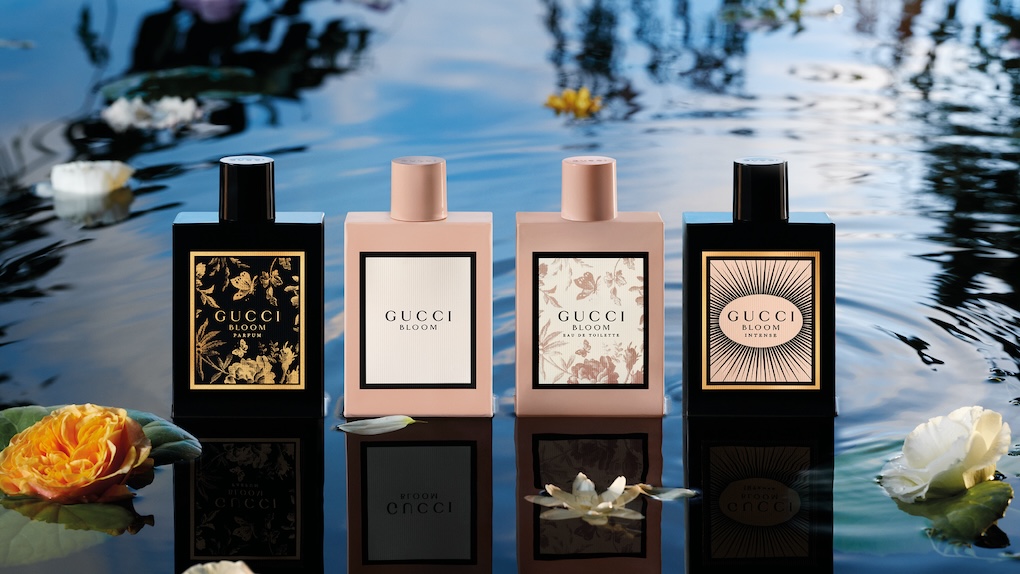
The context that makes this charge particularly significant is the Gucci license clock. Coty’s strategic review correspondence with the SEC, filed earlier this year, explicitly acknowledges that the Gucci fragrance license — one of the most commercially important assets in Coty’s prestige portfolio — will expire in fiscal year 2028 and will not be renewed, with that impact already conservatively reflected in the company’s long-term projections.³ The license transfer to L’Oréal, confirmed as part of the Kering Beauté transaction that closed in March 2026, represents not just the loss of a single license but the removal of one of the clearest examples of what Coty’s prestige fragrance business is capable of when operating with top-tier licensed brand equity. Fragrance already accounts for approximately 69% of Coty’s sales, up from 55% in 2019, according to Jefferies analyst Ashley Helgans, who noted plainly: “Further tying performance to a slowing category” creates concentrated risk rather than a defensive moat.⁴
The arrival of Marc Jacobs Beauty in June 2026, confirmed in Coty’s own Q3 earnings release as “makeup under Marc Jacobs Beauty expected to debut in CY26” and subsequently as debuting this month, is an interesting data point in this context.⁵ The relaunch lands at a moment when the underlying fashion brand has been sold by LVMH to WHP Global and G-III — meaning the brand equity Coty is licensing is now anchored in a fashion house under entirely new ownership, with no guarantee of the cultural investment that makes a beauty license commercially viable over time. Marc Jacobs Beauty’s original run under Kendo generated genuine cult loyalty, and the revival has attracted meaningful consumer anticipation — the Instagram teases, Marc Jacobs’ own Met Gala preview post, and the Sephora placement confirm a genuine commercial effort. But a new fragrance license relaunching into a mass-prestige market characterized by fragmentation, a consumer beauty business under impairment review, and a Gucci license entering its final runway represents a company operating with a narrowing set of strong cards. The relaunch needs to work commercially and quickly. Coty’s current financial structure does not provide the patience for a slow build.

New CEO Markus Strobel, who took the role at the beginning of 2026, withdrew the company’s prior full-year FY26 guidance for EBITDA and free cash flow in the Q3 release, providing guidance only for Q3 itself — a move that signals either genuine uncertainty about the second half or a management team unwilling to commit to numbers it cannot defend.⁶ Strobel inherited a company mid-transformation, mid-review, and mid-impairment, which is an unusually complex operational inheritance, and his public framing — focusing investments behind core CoverGirl and Rimmel franchises, expanding Adidas fragrances globally, preparing for the Marc Jacobs relaunch — reflects a rational prioritization of what is still growing over what is clearly not.
The harder question, the one the strategic review has not yet answered publicly, is who buys CoverGirl, Rimmel, Sally Hansen, and Max Factor if Coty decides to divest them. The beauty M&A market in 2026, as Capstone Partners noted in its December 2025 outlook, is characterized by surgical acquisitions of high-growth assets rather than large-scale platform purchases of challenged mass brands.⁷ WWD industry sources characterized the likely buyer profile for Coty’s mass color assets as “value players” — the Windsong Globals, the AS Beauties, the Rare Beauty Brands — turnaround operators who specialize in acquiring brands at distressed multiples and rebuilding them outside the financial expectations of public company ownership.⁸ For brands that collectively represent $1.2 billion in revenue but declining sell-out trends, that buyer profile is not a humiliation. It is the realistic market. Over the next six to twelve months, the central variable is whether Coty finds a buyer for the consumer beauty division at a price that provides meaningful balance sheet relief, or whether the strategic review resolves into a restructuring rather than a divestiture — a slower, more expensive path that ties up management attention the prestige fragrance pivot urgently needs.