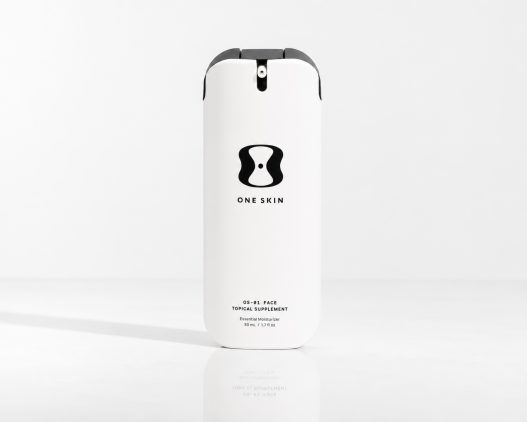
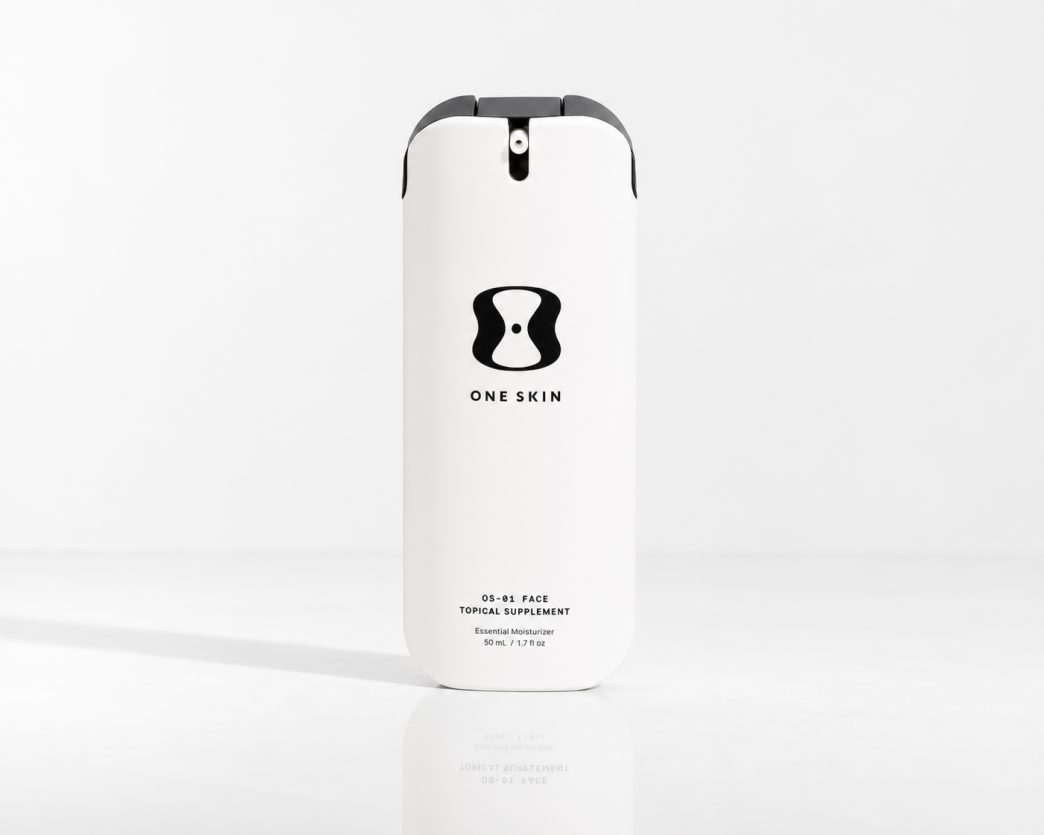
La Mer had Crème de la Mer. Dr. Barbara Sturm had MC1. Augustinus Bader had The Cream. OneSkin has a $117 “topical supplement” designed to turn cellular-senescence science into both a defining product and a scalable beauty brand.
Every generation of prestige skincare gets a moisturizer that becomes shorthand for the company behind it. The product is not simply the bestseller; it carries the entire thesis. Crème de la Mer made mythology feel like an ingredient. Dr. Barbara Sturm’s bespoke MC1 moisturizer translated her medical identity into luxury beauty. Augustinus Bader entered the market in 2018 with The Cream and The Rich Cream and, two years later, reported $70 million in sales. Consumers did not need to understand the full business. They needed to believe in one cream. (La Mer, Dr. Barbara Sturm, Allure)
That is the particular power of a hero moisturizer. It gives retailers a reason to make room, editors a clean story to tell and customers one memorable way into a brand. It is universal enough to sit at the center of a regimen, sensorial enough to create attachment and replenishable enough to support repeat purchase. The assortment may eventually expand, but the authority of the brand remains concentrated in one bottle or jar.
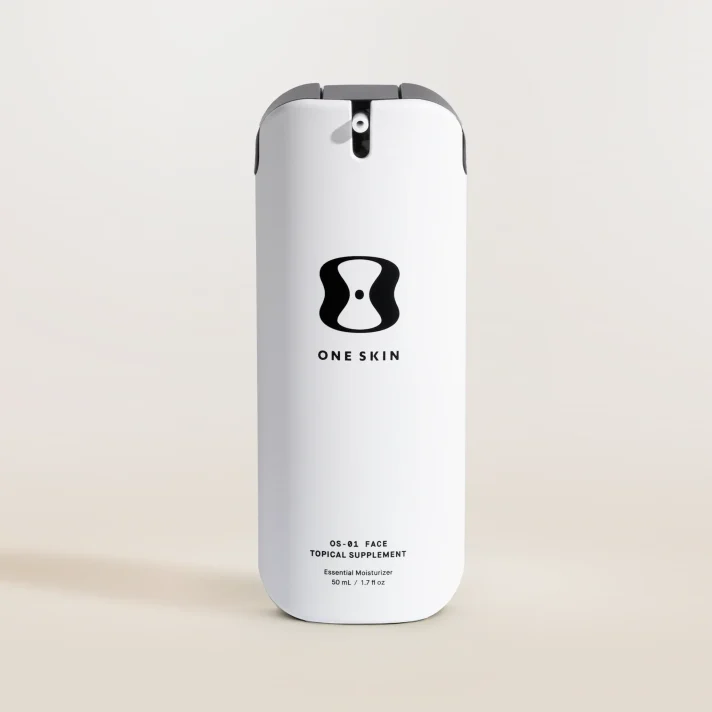
OneSkin is making the same bet with OS-01 FACE, updated for beauty’s longevity era. Launched in 2021, the moisturizer translates the company’s research on cellular senescence into a familiar daily object. It is product, proof of concept and customer-acquisition strategy at once. Once the OS-01 peptide makes sense on the face, its expansion into body, eye, lip and hair products follows naturally, as its trajectory validates.
The phrase “Topical Supplement” is central to the proposition. It shifts the moisturizer from occasional indulgence to accumulated daily maintenance, while fitting naturally with a refill and subscription model. It also distinguishes OneSkin from hero creams built primarily around sensorial pleasure. OS-01 is asking to be understood as a healthspan intervention delivered through skincare.
A successful hero product needs three things: a reason to believe, an experience worth repeating and a concept broad enough to support what comes next. On paper, OS-01 FACE has the architecture for all three. Four scientific founders, a proprietary screening platform, peer-reviewed preclinical research and a vehicle-controlled face study give it an unusually developed origin story. Whether the evidence and the experience are strong enough to make OS-01 not simply OneSkin’s first product, but its defining one, is the more interesting question.
The Company Behind the Cream
OneSkin’s origin story is almost the reverse of the modern celebrity-beauty playbook. The brand was not conceived around an audience and subsequently supplied with a laboratory narrative. It began with four Brazilian scientists—Carolina Reis Oliveira, Alessandra Zonari, Mariana Boroni and Juliana Carvalho—whose expertise spans immunology, stem-cell biology, tissue engineering and bioinformatics.
Oliveira moved from Brazil to Silicon Valley and co-founded OneSkin in 2016. The company entered the IndieBio accelerator that year; Zonari joined as a founding member and chief scientific officer in 2017. According to the company’s timeline, the team screened more than 900 peptides in 2017 and 2018, spent the following years refining a topical formula and commercially launched OS-01 FACE in 2021.
The moisturizer sits on top of a broader research platform, and that platform is what gives the business its distinction.
In 2020, OneSkin researchers published a skin-specific DNA-methylation clock trained on 508 human skin samples and 2,266 CpG sites. The tool, generally referred to as MolClock, was designed to estimate the methylation age of skin tissue and cells more accurately than clocks built across multiple tissue types. The company could therefore screen candidate ingredients, select a peptide and measure whether treated tissue shifted toward a younger methylation pattern.
Commercially, this is powerful vertical integration: OneSkin developed the ruler, found the molecule that performed well against that ruler and then built the finished product around it. It also shapes how the evidence should be read. A proprietary measurement platform and a proprietary active validated by substantially the same team are not the same as independent confirmation. MolClock is an interesting research tool; movement on that clock is not, by itself, proof that a person’s face has become meaningfully younger or that her healthspan has increased.
Investors have nevertheless placed a serious bet on the category. OneSkin closed a $7 million Series A in 2024, led by Selva Ventures, bringing its then-disclosed total funding to $20 million. In 2025, Prelude Growth Partners announced a separate $20 million strategic investment. That later transaction included replacing an early seed investor, so it should not be read simply as another $20 million of fresh operating capital. It is still notable. Prelude’s beauty portfolio has included Sol de Janeiro, Summer Fridays, Naturium, Tower 28 and Westman Atelier—companies that know how to turn a differentiated product story into a much larger consumer brand.
OneSkin is therefore using a moisturizer to establish “skin longevity” as a recognizable category before the phrase becomes as routine—and as commercially crowded—as “clean beauty” or “barrier repair.”
What OS-01 FACE Actually Is
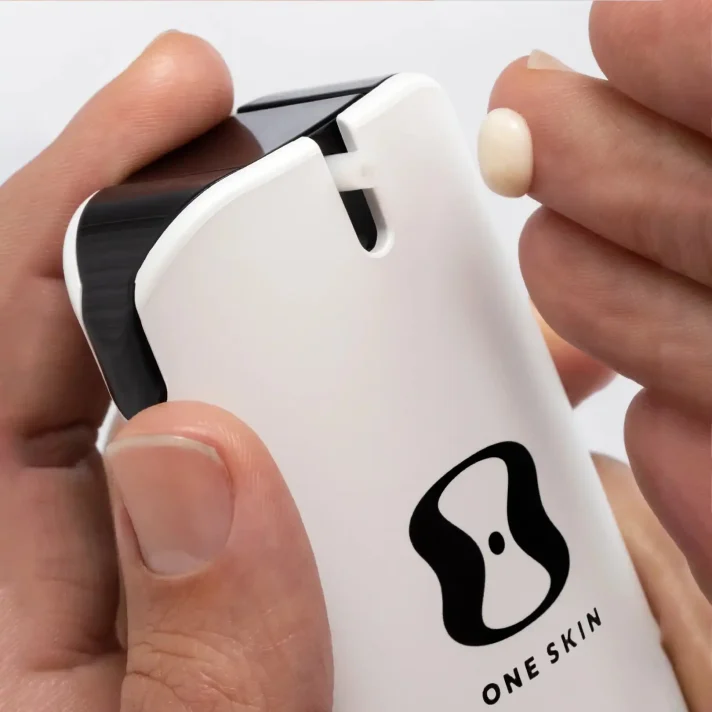
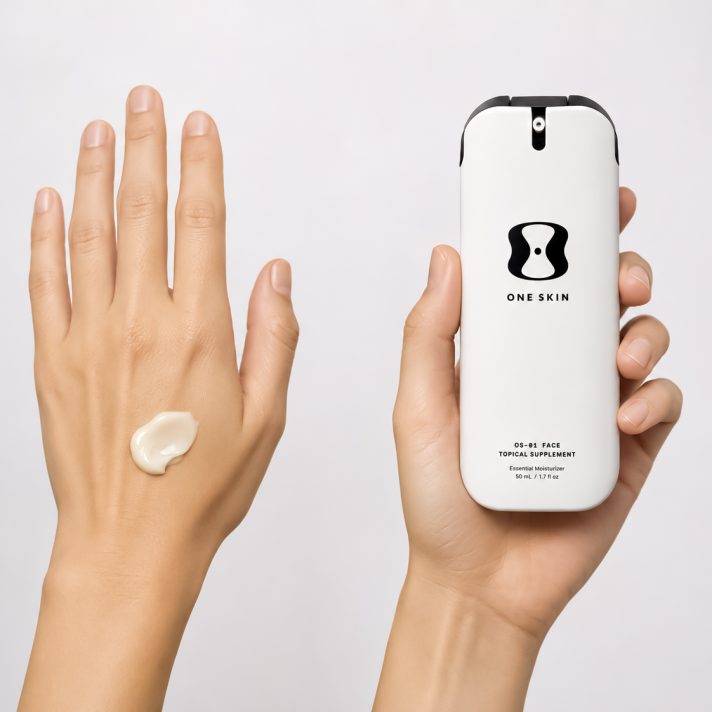
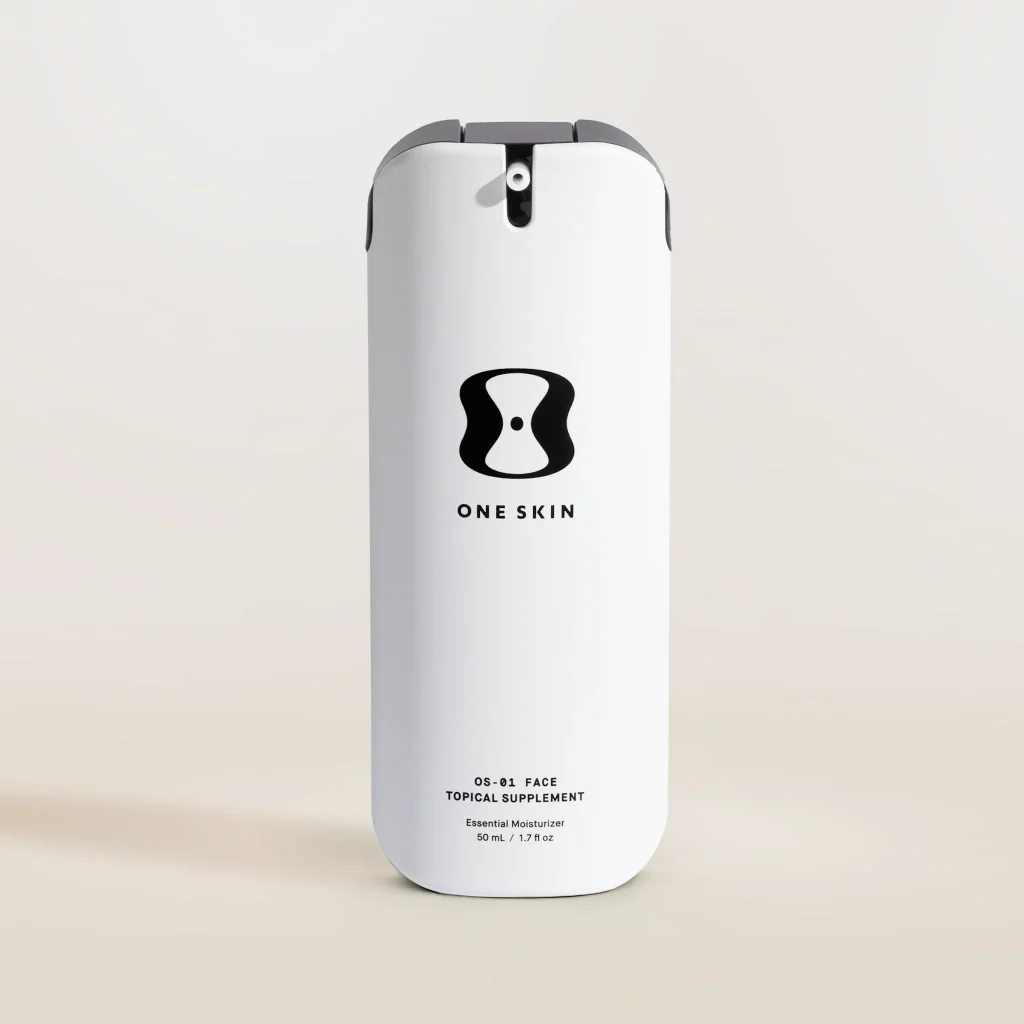
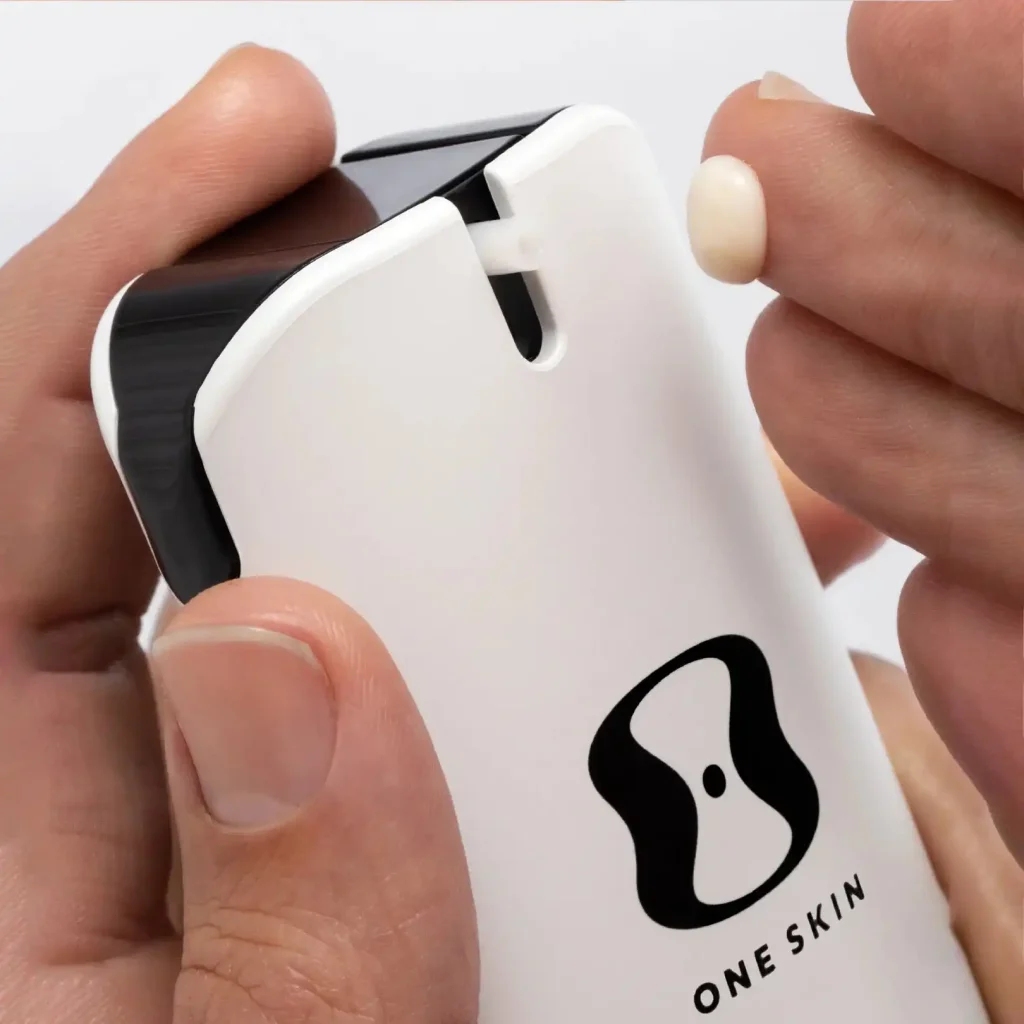
OS-01 FACE is a fragrance-free, 50 mL moisturizer for the face and neck, designed to be used morning and evening. OneSkin currently sells it through a reusable outer dispenser and refill system. The current refill listing is $117 for a one-time purchase; the brand advertises 15% subscription savings, or approximately $99.45 per refill. The site recommends one to two pumps twice daily.
“Topical supplement” is brand language, not a recognized regulatory category. The FDA defines dietary supplements as products intended for ingestion and states specifically that topical lotions and ointments cannot be dietary supplements. In practical terms, OS-01 FACE is a cosmetic moisturizer with a proprietary peptide—not a dietary supplement and not an approved anti-aging drug. (FDA)
That does not make the phrase meaningless. It tells you how OneSkin wants the product to be understood: less as a sensorial finishing cream and more as a daily intervention, accumulated over time. The name is strategically excellent. It should not be confused with a new legal or medical class of product.
Inside the Formula
Before the proprietary peptide enters the picture, the formula is already a well-constructed moisturizer.
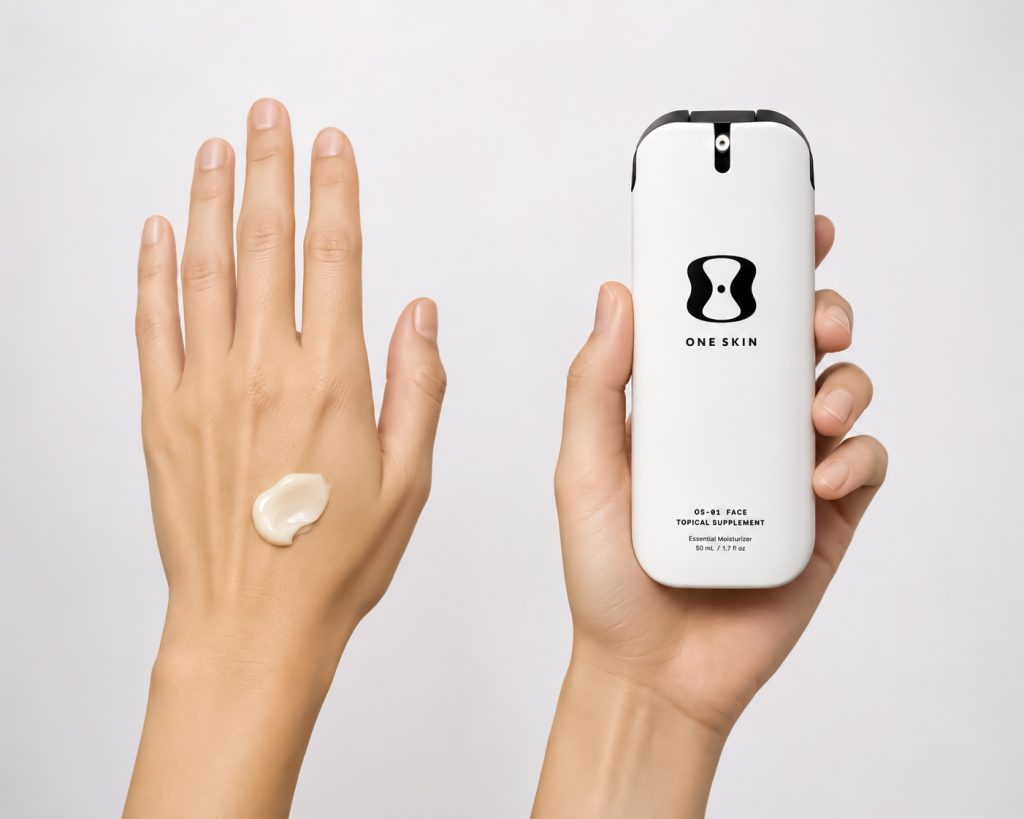
Water and glycerin lead the ingredient list. Olive-derived emulsifiers are followed by squalane and a run of emollient plant oils: andiroba, grape seed, pracaxi, rosehip and plum seed. Three forms of hyaluronic acid provide water-binding support; niacinamide, allantoin and vitamin E add familiar barrier, soothing and antioxidant functions. The proprietary OS-01 peptide appears on the ingredient list as Decapeptide-52. The published laboratory formulation was optimized at 0.01% w/v, although OneSkin does not state a percentage on the retail product page.
This distinction matters because skincare studies often compare a finished active formula with nothing at all, making it difficult to separate the effects of hydration from those of a novel technology. OneSkin did something more useful: in its face trial, the control side received the same base formula without OS-01.
That vehicle was not inert. It still contained glycerin, oils, hyaluronic acid, niacinamide and allantoin. In other words, both sides received a real moisturizer, and both sides improved on several measures. The question the study can begin to answer is not “Does OS-01 FACE make skin look better than using nothing?” It is the more demanding question: “What did the proprietary peptide add to an already good moisturizing base?”
At $117 per refill, that is the question that matters.
The Peptide and the Senescence Story
Cellular senescence is real, consequential biology. A senescent cell has stopped dividing but remains metabolically active. In the right context, senescence can help suppress tumors and support wound healing. As senescent cells accumulate with age, however, their inflammatory secretions—often grouped under the term SASP, or senescence-associated secretory phenotype—can contribute to tissue dysfunction.
There are two broad ways researchers try to intervene. Senolytics are intended to eliminate senescent cells. Senomorphics attempt to suppress their harmful behavior or prevent cells from progressing into a more damaging late-senescent state. OS-01 is better understood as the latter. OneSkin’s 2023 paper described Peptide 14, now OS-01, as modulating PP2A-related signaling, supporting DNA repair and reducing the number of cells progressing toward late senescence. “Switching off the cells that degrade collagen,” the phrasing on the product page, is a consumer-friendly compression rather than a literal description of what has been demonstrated.
The preclinical paper is genuinely interesting. The researchers tested the peptide in aged fibroblasts, 3D skin equivalents and ex vivo human skin. They reported reductions in senescence and inflammatory markers, improvements in skin-structure markers and an average 2.6-year reduction in estimated DNA-methylation age in treated ex vivo skin.
The operative phrase is ex vivo. These were human skin samples maintained outside a living person, not faces made 2.6 years younger in a clinical trial. A methylation-age shift is a biomarker result, not evidence that the product reverses chronological age, extends life or produces a specific visible change in an individual.
The same caution applies to OneSkin’s retinol comparison. In laboratory skin models, the company reported more favorable short-term senescence and collagen-related biomarkers with OS-01 than with retinol. OneSkin’s own claims page notes that these were acute responses after five days and may not reflect long-term human results. They do not displace the decades of clinical evidence behind topical retinoids. The fact that the brand now makes that limitation relatively easy to find is good transparency; the much broader “reverse skin aging” language naturally travels further.
What the Face Study Really Shows
The best evidence for OS-01 FACE is a 2024 peer-reviewed, 12-week, double-blind split-face study. Twenty-five women were enrolled and 22 completed it. All were white, non-Hispanic women aged 47 to 65 with Fitzpatrick skin types II or III. They applied the complete OS-01 formula to the left side of the face and the identical peptide-free vehicle to the right, twice daily, while using the same supplied cleanser and sunscreen.
The split-face design is useful because every participant serves as her own control. It reduces the noise created by diet, climate, baseline skincare and genetics. The vehicle control is more informative than the uncontrolled consumer-perception studies common in luxury beauty.
The results are promising, but narrower than the product page’s clean percentages suggest:
- Barrier function: Transepidermal water loss improved by an average of 18.9% at six weeks and 14.2% at 12 weeks on the OS-01 side. The active side significantly outperformed the vehicle at six weeks; at 12 weeks, the direct comparison narrowly missed the conventional statistical threshold (p=0.055). The paper’s narrative says the between-formula difference was significant at both time points, but its Table 2 gives p=0.055 at week 12; this review follows the table.
- Texture: Measured roughness improved by 5.05% at 12 weeks on the OS-01 side. This was significant both from baseline and versus the vehicle (p=0.030). This is the clearest peptide-specific visible-skin result in the paper.
- Wrinkle indentation: The OS-01 side improved by 6.62% at 12 weeks, but the result did not reach statistical significance from baseline (p=0.065) or versus the vehicle (p=0.072). It is an encouraging trend, not a conclusive wrinkle-reduction result.
- Radiance: The OS-01 side improved by 16.63% from baseline, which was significant. The direct comparison with the vehicle was not (p=0.208). Blinded experts also saw improvements on both sides.
This is why the brand’s responder claims—100% improved smoothness, 96% improved firmness, radiance and tone, and so on—need context. They describe the proportion of participants showing some improvement on selected assessments, not the average magnitude attributable uniquely to the peptide. In the published paper, both formulas improved several outcomes, and participants sometimes rated the vehicle side as favorably as, or more favorably than, the peptide side.
There are other limitations. The sample was small and demographically narrow. The peptide was always assigned to the left side rather than the treatment side being randomized, leaving room for inherent side-to-side differences. The methods also specify an unpaired t-test for the treatment comparison even though split-face observations are paired, a choice that deserves explanation. The study assessed many outcomes, which increases the possibility of chance findings. OneSkin funded the work; several authors are founders or patent inventors; and the research data were not shared. One participant discontinued after dryness and a cheek rash considered likely related to treatment, while another experienced brief mild irritation.
Taken together, those features define it as a proof-of-concept study. It supports a credible incremental benefit for texture and an encouraging barrier signal. It does not establish that OS-01 reverses biological aging in the faces of consumers.
OneSkin published a second randomized study in 2025 involving 60 women aged 60 to 90, with 52 completing the trial. That study found better barrier and hydration outcomes with OS-01, a reduction in circulating IL-8 and a trend toward slower GlycanAge change. It is relevant to the platform, but not direct evidence for OS-01 FACE: participants applied OS-01 BODY across the body, and the control was a different commercial moisturizer rather than the matching formula without peptide. The authors also acknowledged that diet, sleep, stress and physical activity were not standardized.
The scientific picture is encouraging but specific. OS-01 has a plausible mechanism, good preclinical work and an unusually informative small face trial. What it does not yet have is a large, diverse, independently replicated clinical program showing reliably repeatable outcomes.
The Experience
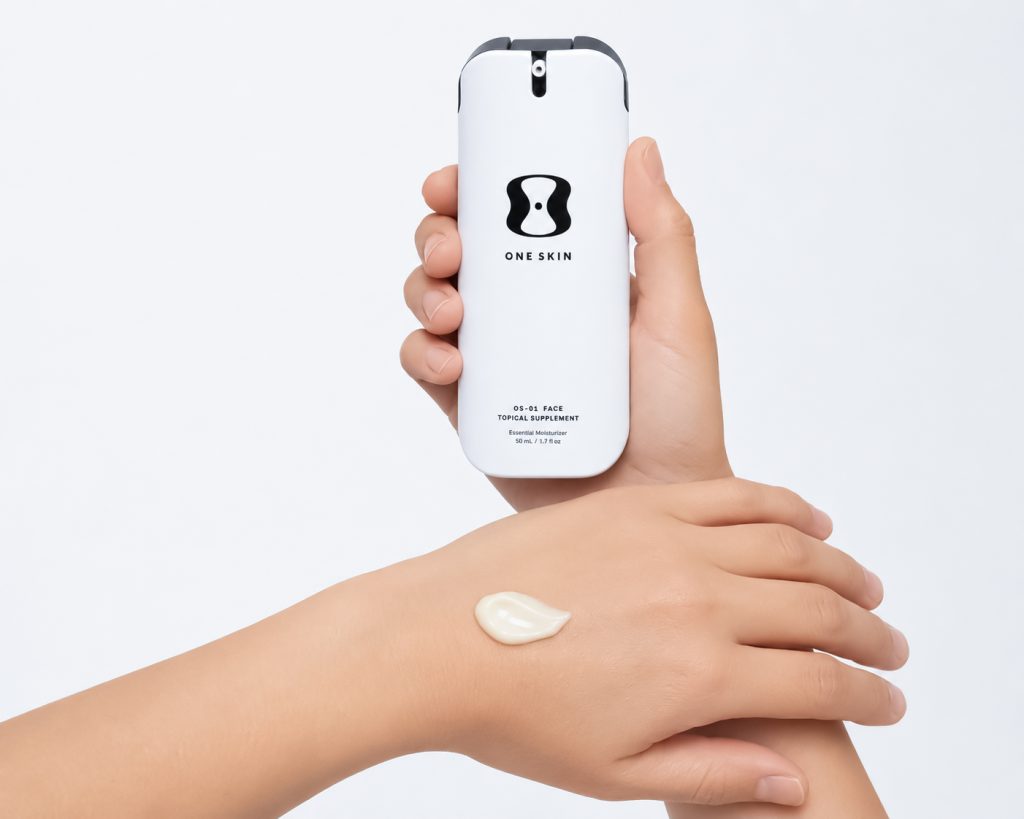
OS-01 FACE surprised me by how much and how little it behaves like the traditional prestige moisturizer its price naturally invites comparison to. Sounds confusing? Here’s why. The texture falls somewhere between a lotion and a light cream: fluid enough to move easily, but with more substance than a serum. One to two pumps cover the face and neck without much effort, and despite the squalane and five plant oils, it absorbs quickly without leaving a greasy film or dense seal. My skin felt soft and lightly conditioned rather than coated. I think with a product at this price point and messaging, any texture is going to feel surprising, so perhaps it’s not the texture itself, but rather my questions about how they arrived at that consistency and feel.
That disappearing quality is both its appeal and its limitation. During the day, it is an elegant moisturizer—quick, clean and easy to move on from. At night, or whenever my skin felt drier, I sometimes wanted something richer over it. I came to think of OS-01 less as a plush final cream and more as a treatment-moisturizer hybrid. Anyone accustomed to the immediate cushion of Crème de la Mer or even the more complete finish of Augustinus Bader The Cream will notice the difference.
Scent is barely a factor. OS-01 is fragrance-free in the practical sense, not merely the technical one: there is no perfume, no lingering aroma and nothing that competes with the rest of a routine. At most, I could detect a faint trace of the unmasked formula immediately after dispensing, and it disappeared as soon as the product was spread. It lacks the deliberately composed sensorial identity of a traditional luxury cream, but also marks what I notice to be a strong decision: it strips away most subjective choices opting for neutral baselines where everything is as inoffensive and agreeable as possible.
Layering required slightly more restraint. A thin application settled cleanly, while using more full pumps over several preceding products made pilling more likely. I had the best result with a smaller amount, pressed and smoothed over the skin, followed by a brief pause before the next step. The refillable dispenser is a smart piece of product hardware, although the pump can become finicky as the pouch empties; removing and reseating the refill restores the flow.
The earliest noticeable result was straightforward moisturization: skin felt softer, smoother and a little more supple. With consistent use, the change became easier to register as overall skin quality than as a dramatic before-and-after. Texture looked more even, the complexion appeared subtly brighter and my skin felt better conditioned, but I did not see the kind of decisive wrinkle correction that the language of age reversal might lead one to expect.
That subtlety ultimately defines the experience. OS-01 did not transform the face so much as make the skin’s baseline feel incrementally better—more even, comfortable and maintained. It is the kind of result that becomes meaningful if those small improvements persist, and easy to dismiss if the expectation is an immediate luxury finish or visible structural change a kin to going under a knife. In use, the product makes the strongest case for itself as a sophisticated lightweight moisturizer with a treatment-level ambition.
OneSkin vs. Augustinus Bader and La Mer
OneSkin is often placed beside Augustinus Bader and La Mer because all three use proprietary regeneration technology to anchor a premium moisturizer. In use, however, they are not interchangeable.
| Product | Current US price | Approx. price per mL | Sensory position | Evidence position |
|---|---|---|---|---|
| OneSkin OS-01 FACE refill, 50 mL | $117 one-time; about $99.45 subscription | $2.34; about $1.99 subscription | Light lotion/cream; fast-absorbing; fragrance-free; may need a cream over it | Peer-reviewed preclinical work plus a 22-person vehicle-controlled face trial; company-funded |
| Augustinus Bader The Cream, 50 mL | $315 | $6.30 | Lightweight luxury cream; designed for normal/combination skin; fragrance-free | Brand reports small 4-week clinical trials and consumer testing; no matching vehicle-controlled, peer-reviewed product study located |
| La Mer Crème de la Mer, 2 oz. | $390 | About $6.50 | Rich, occlusive, scented ritual cream; strongest fit for dryness and sensorial luxury | Brand clinical claims; methodology is less visible on the retail page |
The closest conceptual comparison is Augustinus Bader The Cream: both are 50 mL, fragrance-free, relatively lightweight moisturizers organized around proprietary peptide technology and a cellular-renewal narrative. Bader currently costs almost 2.7 times as much per milliliter. OneSkin’s published face study is also more revealing than Bader’s retail-page evidence because it attempts to isolate the proprietary active from the base.
That does not mean OneSkin feels like a lower-priced Bader replacement. Bader’s strength is its particular finish and dependable all-in-one moisturization. OS-01 is lighter, quicker and more likely to behave as a treatment step, especially on dry skin.
Crème de la Mer is an even less literal comparison. La Mer is dense, aromatic and deliberately ritualistic; OS-01 is spare, quick and clinical. Someone who loves the cocooning finish of Crème de la Mer is unlikely to consider OS-01 a sensorial substitute. A dry-skin user may plausibly use OS-01 underneath a richer cream, but doing so weakens OneSkin’s implicit routine-simplification argument and raises the total cost.
OneSkin is cheaper than either traditional luxury reference, but it is not inexpensive skincare. The price reflects a proprietary molecule, a research program and the work of establishing a new category—not simply the emollient base. Its value ultimately rests on how much significance a buyer assigns to a promising but not yet independently replicated peptide signal.
Who It Is For
OS-01 FACE makes the strongest case for someone who is science-curious, comfortable with a premium DTC subscription and willing to evaluate a product over a full 12 weeks rather than look for an immediate / two-week transformation. It is particularly interesting for normal-to-combination skin, for people who prefer a light daytime finish and for those who cannot tolerate retinoids but still want a gentle, research-led intervention.
There is also a reasonable use case alongside a retinoid rather than instead of one. The formula’s humectants, emollients and soothing agents make the pairing plausible without duplicating the retinoid’s mechanism. Introduce it separately, however, so any irritation or pilling can be attributed correctly.
Anyone testing it seriously should keep the rest of the routine stable, take standardized baseline photographs and judge hydration, roughness and tolerance separately from wrinkles. Those are distinct outcomes, and the evidence is not equally strong for all of them.
Who Can Skip It
Very dry skin that wants a plush, occlusive final cream may find OS-01 insufficient on its own. A La Mer or Rich Cream loyalist shopping primarily for cushion, richness and ritual is buying a different kind of product.
Anyone expecting it to replace sunscreen or a well-tolerated retinoid should also recalibrate. Daily broad-spectrum sunscreen remains foundational (note: One Skin does offer a Mineral SPF), and prescription retinoids have a much larger and more mature human evidence base for photoaging. OS-01’s five-day ex vivo comparison with retinol does not overturn that hierarchy.
Budget-conscious readers can buy excellent glycerin-, squalane-, niacinamide- and hyaluronic-acid moisturizers for far less. What cannot currently be duplicated in a lower-priced formula is Decapeptide-52 itself. The decision is therefore unusually clean: if the proprietary peptide and its early evidence are not specifically compelling to you, the rest of the formula does not require a $117 outlay.
Those with highly reactive skin should patch test. The product is fragrance-free, has the National Eczema Association Seal of Acceptance and was generally well tolerated in the face study, but neither a seal nor a small trial makes an individual reaction impossible.
The Verdict
As a piece of brand creation, OS-01 FACE is reliably complete. It has an ownable active, a memorable category phrase, a refill-and-subscription model that encourages repetition and a scientific premise broad enough to extend across different categories. OneSkin has already used it to create the logic for eye, body, lip and hair products without losing sight of the original idea.
It is also a hero moisturizer that fits the current demand for science over sensorial. La Mer creates attachment through richness, fragrance and ritual. Augustinus Bader The Cream has an immediately recognizable finish. OS-01 is lighter and less ceremonious; its reward is meant to accumulate through better skin quality over time. That makes the evidence especially important.
Here, OneSkin’s proposition holds up well to closer examination—not because the research proves every interpretation of “skin longevity,” but because there is a serious research program beneath the positioning. The founders built a real screening platform. OS-01 has a biologically plausible target and substantial preclinical work. The company ran a small but meaningful split-face, vehicle-controlled trial rather than relying only on before-and-after photography and satisfaction surveys. The complete formula is thoughtful, fragrance-free and more affordable than the luxury creams consumers naturally compare it with.
The same close reading also narrows the claim. The most convincing human evidence is for an incremental improvement in texture and a barrier-function signal over 12 weeks. Wrinkle indentation and radiance moved in a favorable direction, but did not significantly beat the vehicle at the end of the study. The “biological age reversal” result belongs to ex vivo skin and a company-developed methylation clock, not to the faces of retail customers. Every pivotal OS-01 paper located for this review includes company researchers and patent holders; independent replication remains the missing piece.
At $117 per refill, OS-01 FACE is a premium bet on an emerging area of peptide research. For a retinoid-intolerant, normal-to-combination user who values unscented, lightweight skincare and is intrigued by senescence biology, a disciplined 12-week trial makes sense. For someone seeking La Mer richness, Bader’s exact finish, dramatic wrinkle correction or the strongest outcome per dollar, it is not the obvious answer.
“Topical supplement” is a positioning construct, but it is not an empty one. The moisturizer is thoughtfully formulated, the peptide has a legitimate early signal and OneSkin has built an unusually complete scientific and commercial system around it. The evidence does not yet turn a face cream into longevity medicine.
OS-01 FACE has nevertheless established OneSkin’s identity more effectively than most products ever do. It turns cellular senescence into a twice-daily ritual, gives retailers and customers a single point of entry and supplies the rationale for every extension that follows. Whether it joins La Mer and Augustinus Bader in the larger canon of hero moisturizers will depend on whether its incremental skin-quality gains become as memorable as its scientific story. OneSkin has built the brand around the right object. OS-01 now has to become indispensable.
Editorial and Medical Disclaimer
This article is editorial analysis based on the current ingredient list and pricing, peer-reviewed studies and company disclosures. It is not medical advice. Product prices, packaging and formulas can change. Readers with a skin condition, known allergies or persistent irritation should consult a qualified dermatologist.